Your First Pilates Class: What to Expect Before, During, and After
Before your first Pilates class, almost everyone feels the same two things — curiosity and low-key dread. What do I wear? What if I can’t do any of it? What if everyone else is already good?
I’ve taught Pilates in Seoul for over a decade and introduced several hundred complete beginners to their first reformer class. None of them embarrassed themselves. All of them had questions they were too nervous to ask. This guide is those questions, answered honestly.
What Should You Wear to Your First Pilates Class?
Wear fitted, full-length leggings and a close-fitting top. That’s the short answer. The longer answer is that loose clothing is a safety issue on the reformer — baggy fabric catches in the springs and carriage tracks, and loose tops flip over your face every time you invert.
Avoid:
- Baggy T-shirts and oversized hoodies
- Shorts (your legs will be in positions where shorts ride up)
- Anything with zippers, buttons, or metal embellishments that can scratch the equipment
- Regular cotton socks — they slip on the vinyl carriage
Bring or buy grip socks. In Korean studios, grip socks with rubber soles are standard and usually non-negotiable on the reformer. Most studios, including mm Pilates, stock them at reception for around ₩10,000-15,000.
One more thing: skip heavy moisturizer on your legs the day of class. Slippery skin makes footwork exercises harder than they need to be.
What Actually Happens in the First 10 Minutes?
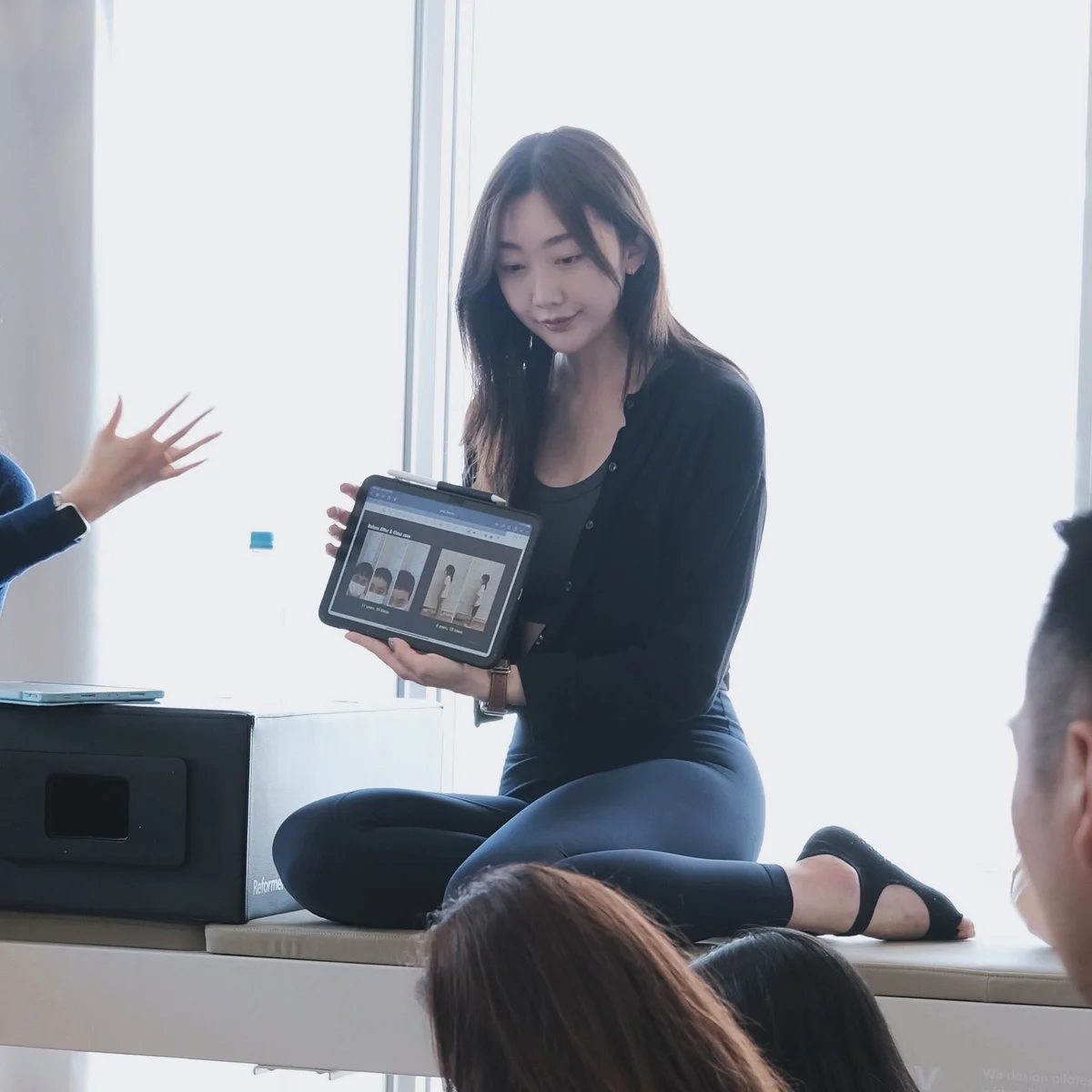
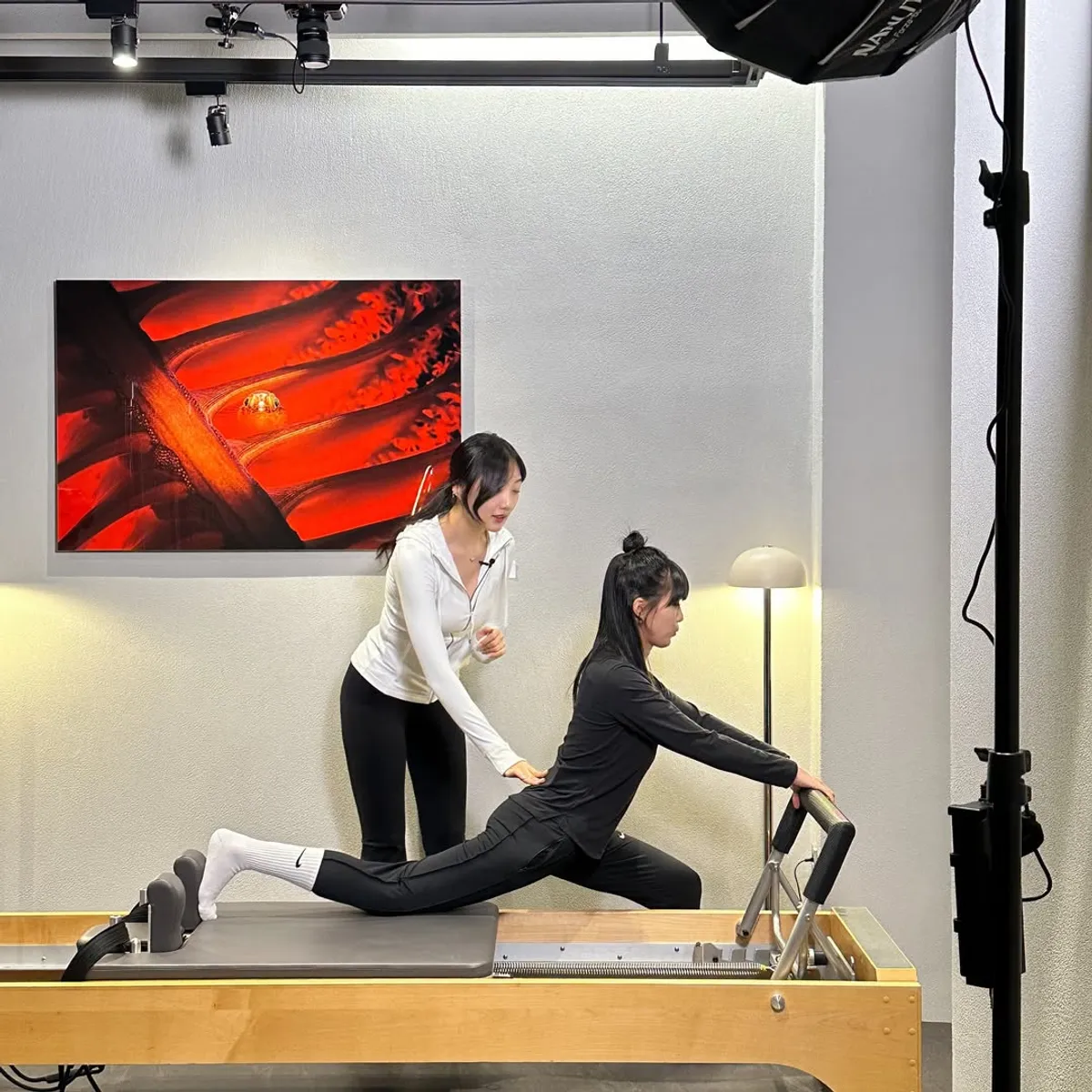
If you walk into a good Korean studio, your first class begins with a posture assessment, not an exercise. This is one of the quiet differences between K-Pilates and much of what’s marketed as Pilates elsewhere — we treat the first session as diagnostic.
Here’s what typically happens:
- Intake conversation (3-4 min): injury history, previous movement experience, goals, any medical considerations
- Standing assessment (3-5 min): your natural posture from front, side, and back — sometimes photographed on an iPad for reference
- Simple movement screens (5 min): a squat, a forward fold, arm elevation — nothing that requires strength, just observation
By the time you touch the reformer, your instructor already knows what your body is doing in gravity. That knowledge is what turns a generic class into a class that’s actually for you.
Will the First Class Be Physically Hard?
Physically, no. Mentally, yes — in a specific way.
Pilates doesn’t exhaust you the way HIIT or heavy weights do. You will not be gasping for air. What will happen is that the instructor will ask you to “engage your deep core” or “lengthen through the crown of your head,” and your brain will return a blank error message, because you’ve never been asked to find those muscles before.
This is called motor learning, and it’s exactly why Pilates works. You’re building neural pathways to muscles your body has been outsourcing for years. The first class is where those connections are most raw. Give yourself permission to feel clumsy.
Breathing is usually the hardest part. Pilates uses lateral (rib-cage) breathing, which is the opposite of the belly breathing taught in yoga. If you’ve done yoga, expect to un-learn. If you haven’t, you’ll learn it faster — no competing pattern to override.
What If I Can’t Do the Movements?
You won’t be able to do all of them. That is the normal and expected outcome of a first class.
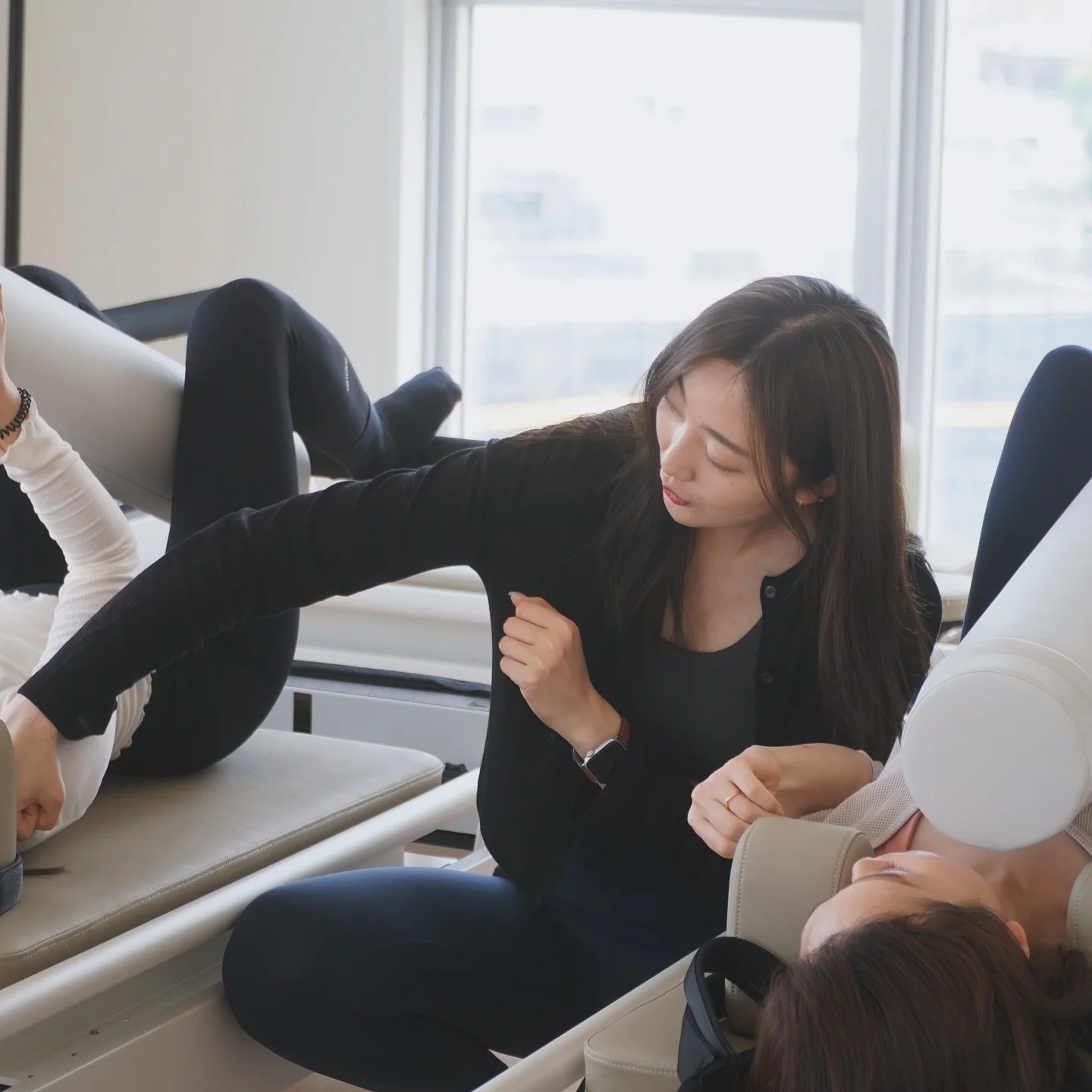
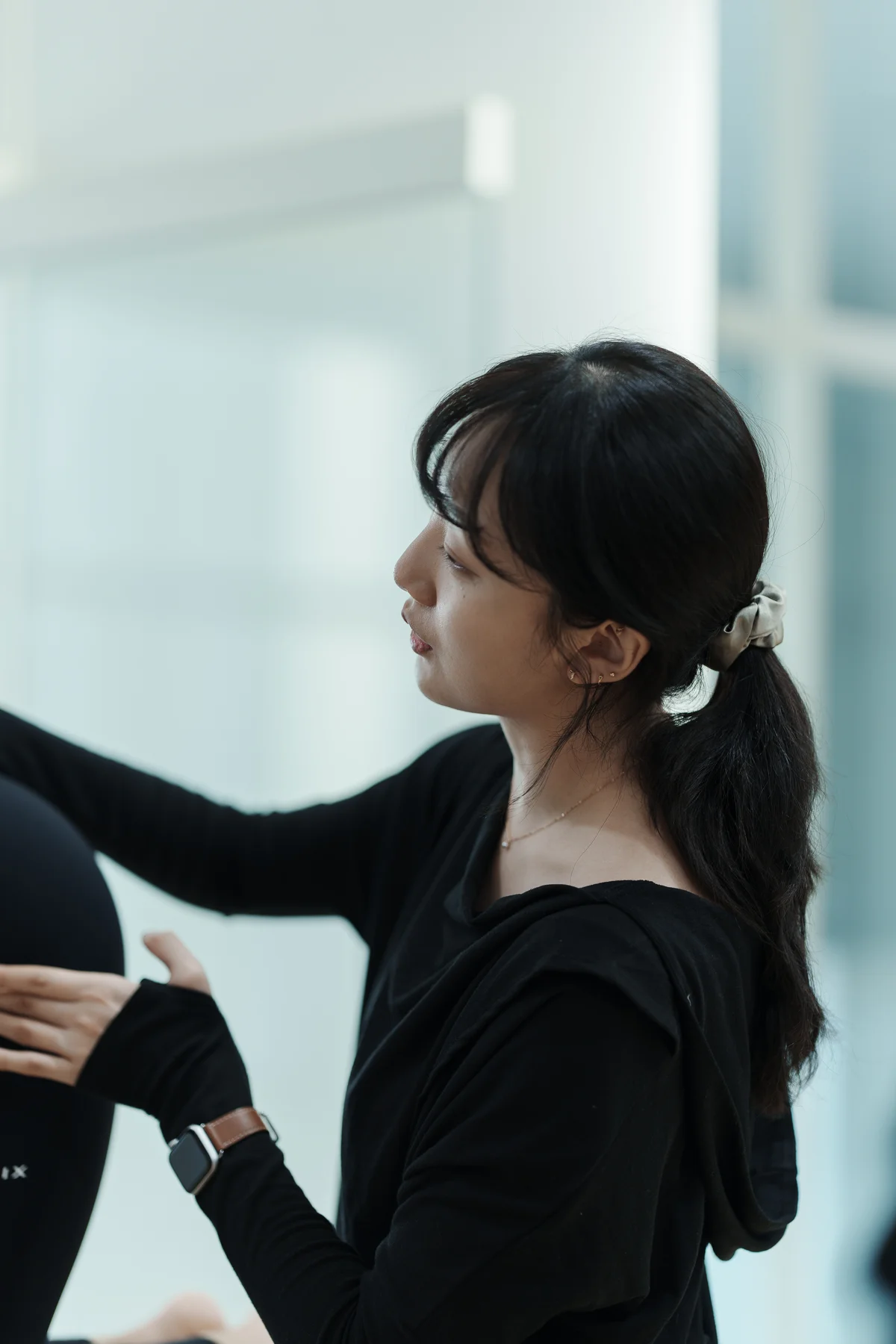
A good instructor is constantly modifying. Too hard? Lighter springs, smaller range of motion, a prop to support you. Too easy (rare in a first class)? Heavier springs or an added layer of complexity. The reformer itself has dozens of settings. There’s always a version that works.
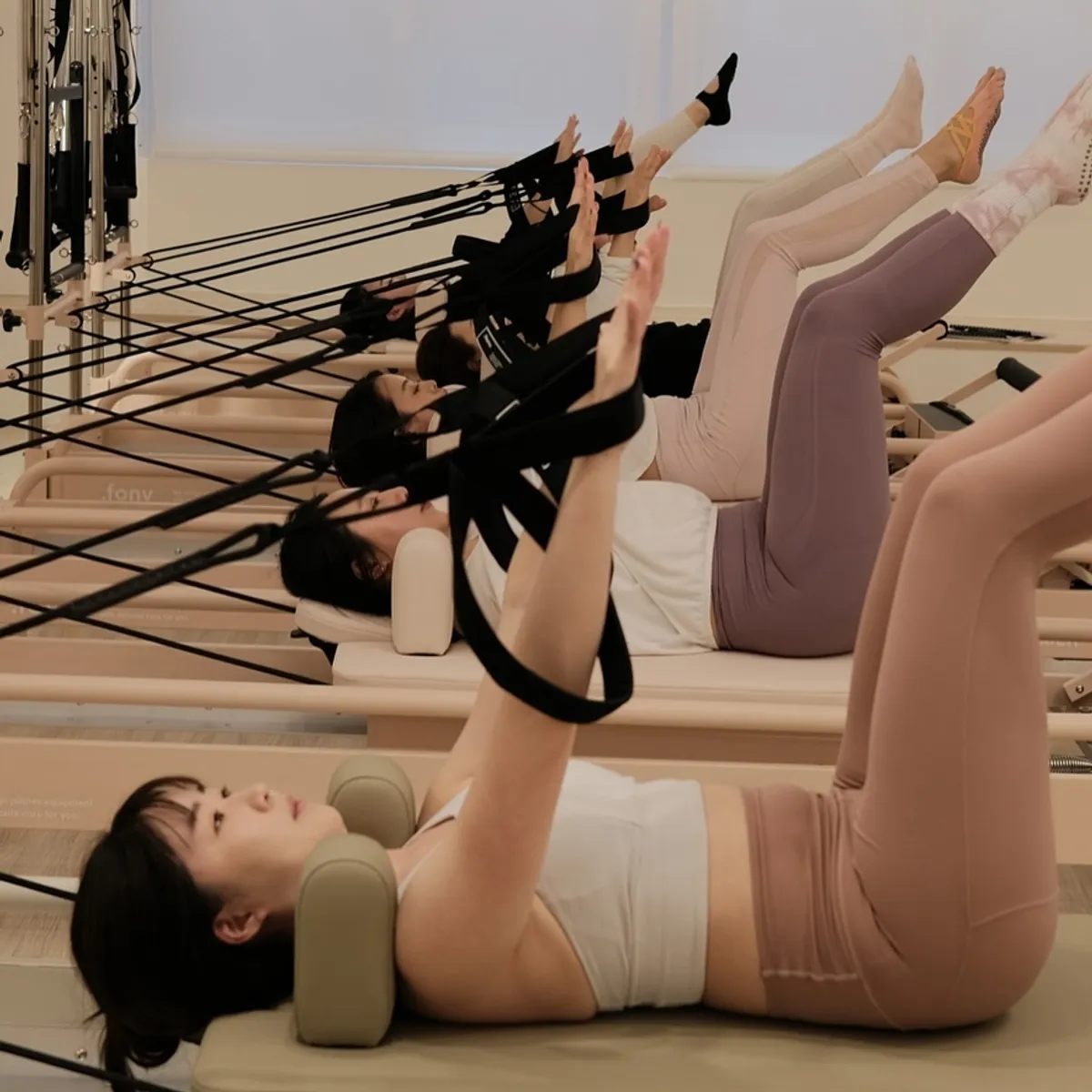
The fear most beginners carry — everyone will watch me fail — is almost never true. Group reformer classes in Korea cap at 4-8 people, and every single person is concentrating on their own carriage. Your instructor has seen every movement pattern imaginable. Whatever your body does in the first class, it’s not the first time they’ve seen it.
My one rule for first-timers: if something feels wrong, say so. Not after class — immediately. “This pinches my knee,” “I can’t feel this in my abs,” “My neck is doing something weird.” That information is more useful than a perfect rep.
What to Expect in the 48 Hours After Your First Class
Soreness is coming, and it’s going to show up in places you didn’t know you had muscles. Common locations:
| Area | Why it’s sore |
|---|---|
| Deep abdominals (below the belly button) | Transverse abdominis engagement — usually dormant |
| Inner thighs | Adduction work on the reformer |
| Mid-back / between shoulder blades | Postural muscles working for the first time |
| Glutes, especially glute medius | Stabilization during leg work |
| Pelvic floor area | Deep core co-activation |
Normal Pilates soreness feels like tightness and tenderness, peaks at 24-48 hours, and eases with gentle movement and hydration. It’s the same DOMS (delayed onset muscle soreness) you get from any novel workout.
Not normal: sharp pain, joint pain, pain that prevents daily activity, numbness, or pain that worsens after 72 hours. Contact your instructor if any of those appear. We would rather hear from you than have you stop coming because something hurt and you didn’t mention it.
Light walking, stretching, and a warm bath help. Avoid skipping class #2 because you’re sore — more on that below.
How to Set Up Class #2 for Success
Your first class is an introduction. The actual practice starts in class two, when your body has a frame of reference.
Three things that help:
-
Take class 2 within 3-4 days of class 1. The motor patterns you just built are fragile. Reinforcing them quickly is how they become automatic. A week-long gap means re-learning the basics, which frustrates beginners and is the #1 reason people quit after 2-3 classes.
-
Tell your instructor what was confusing. “I couldn’t feel my core in the footwork” or “I don’t understand rib-cage breathing” lets them build class 2 around your actual gaps rather than a generic second-class template.
-
Commit to 8-12 sessions before judging. Most beginners don’t feel the “click” of Pilates — the moment the coordination starts to feel natural — until around session 6-8. If you bail at session 3 because it still feels awkward, you’ll miss everything Pilates is actually for.
Twice a week is the realistic beginner cadence. Once a week works for maintenance, not for building new patterns.
Pilates rewards people who stay long enough for the nervous system to catch up. The first class is almost never the one where you fall in love with it — but it’s the one where, if the instructor is doing their job, your body quietly starts reorganizing itself.
If you’re in Seoul and curious, come see us at mm Pilates or DM @pilajuliaa — happy to answer questions before you book.
Frequently Asked Questions
What should I wear to my first Pilates class?
Wear fitted athletic clothing — full-length or cropped leggings and a close-fitting top. Avoid loose T-shirts, baggy shorts, and anything with zippers or metal embellishments. Grip socks are standard in most Korean studios; regular socks slide on the reformer carriage and are unsafe. Most studios sell grip socks at reception if you forget.
Is Pilates hard for complete beginners?
Physically, no — Pilates is not about lifting heavy weight or high-impact cardio. Mentally and neurologically, the first class can feel disorienting because you are learning to recruit deep core muscles most people have never consciously activated. Expect to feel awkward, not exhausted. That awkwardness disappears by class three or four.
What happens in the first 10 minutes of a Pilates class?
In a well-run Korean studio, your first session starts with a posture assessment before any exercise. The instructor checks your standing alignment, asks about injury history and goals, and adjusts the reformer springs to your body. You will usually not do intense work in the first class — it is diagnostic and educational, not a workout to survive.
Why am I so sore after my first Pilates class?
Post-Pilates soreness typically shows up in muscles you rarely use: the transverse abdominis, pelvic floor, inner thighs, and deep back extensors. Normal soreness feels like generalized tightness and peaks 24-48 hours after class. Sharp pain, joint pain, or pain that limits daily movement is not normal — contact your instructor.
How soon should I take my second Pilates class?
Take 24-48 hours of rest, then return. The ideal beginner rhythm is twice a week — frequent enough for your nervous system to consolidate the new movement patterns, spaced enough for muscle recovery. Waiting a full week between classes slows progress significantly because you keep relearning the basics.
Transform Your Movement, Transform Your Life
From Golf & Running Pilates to barre n yoga — discover programs designed by a sports science expert.