Reformer Pilates for Beginners: A Complete Guide From a Korean Studio Owner
If you’ve been hearing about reformer Pilates and wondering whether it’s worth trying, you’re not alone. Reformer classes have exploded in popularity worldwide, and here in Korea, the reformer isn’t a trend — it’s how we’ve been teaching Pilates for over a decade.
As someone who runs two studios in Seoul — mm Pilates (reformer-focused) and mm barre n yoga — I’ve introduced hundreds of complete beginners to the reformer. This guide covers everything you need to know before your first class.
What Is Reformer Pilates, Exactly?
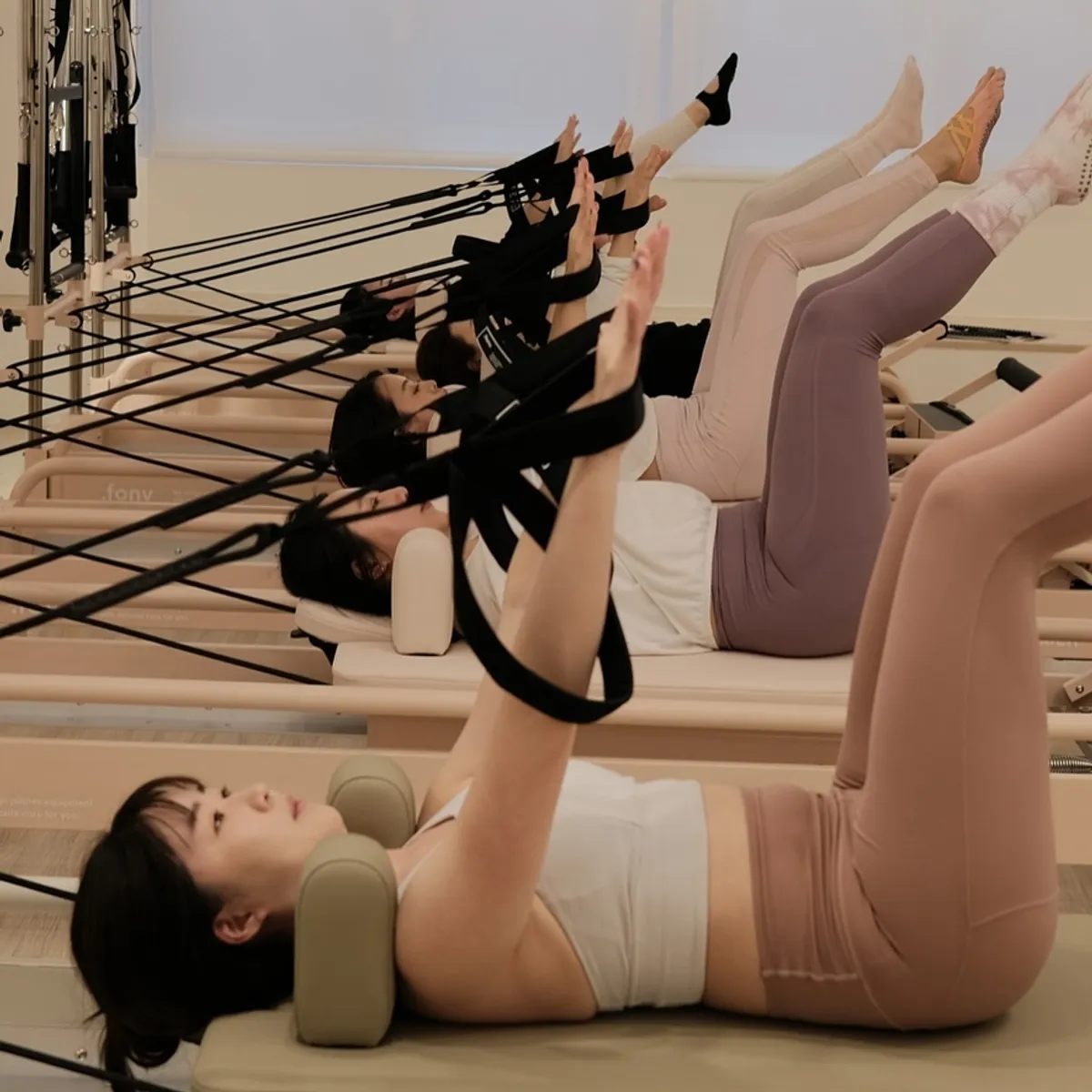
A Pilates Reformer is a bed-like frame with a sliding carriage attached to springs. You lie, sit, kneel, or stand on the carriage and perform exercises against spring resistance. The springs are adjustable — lighter for mobility work, heavier for strength.
Joseph Pilates invented the original apparatus using hospital bed springs during World War I. Today’s reformers are far more refined, but the principle remains: controlled resistance through a guided range of motion.
What makes the reformer special is its versatility. While mat Pilates relies entirely on bodyweight, a reformer offers over 100 unique exercises targeting muscles you didn’t know you had. The sliding carriage also challenges your stability in ways that standing on solid ground simply cannot.
Reformer vs Mat Pilates: Which Should a Beginner Choose?
This is the most common question I hear. Here’s an honest comparison:
| Reformer Pilates | Mat Pilates | |
|---|---|---|
| Equipment | Spring-loaded carriage machine | Floor mat only |
| Resistance | Adjustable springs (light to heavy) | Bodyweight only |
| Exercise variety | 200+ exercises | ~50 core exercises |
| Beginner accessibility | High — machine guides movement | Moderate — requires body awareness |
| Posture correction | Excellent — precise alignment cues | Good, but less targeted |
| Cost per session | Higher (equipment + small groups) | Lower (no equipment, larger groups) |
| Best for | Targeted strengthening, rehab, alignment | Core endurance, flexibility, home practice |
In Korean Pilates culture, the reformer is the default — not a premium upgrade. Most Korean studios start every client on the reformer because the machine itself teaches proper form. The springs guide your body into correct alignment, which means less guesswork for beginners and fewer opportunities for compensatory movement patterns.
That said, mat Pilates has real value. It builds deep body awareness and requires no equipment. The ideal approach is what we do at mm Pilates: start on the reformer to learn correct movement patterns, then integrate mat work as your body awareness develops.
What Happens in Your First Reformer Pilates Class
Walking into a reformer studio for the first time can feel intimidating. The machine looks complicated. But here’s a secret: it’s far more intuitive than it appears.
The Assessment
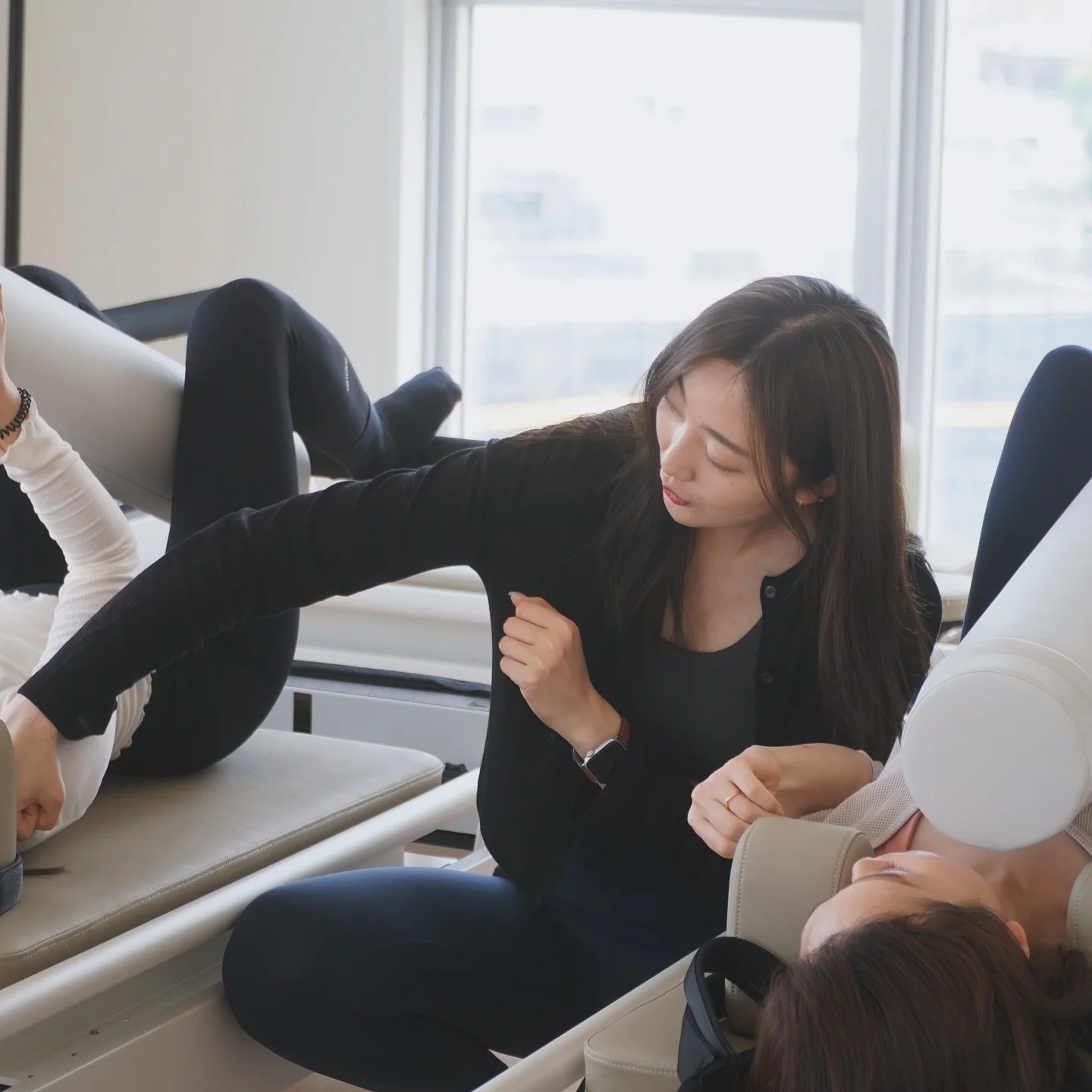
At mm Pilates, every new client begins with a postural assessment — we evaluate your alignment from the front, side, and back. This isn’t a formality. Your assessment determines your spring settings, exercise selection, and progression plan. It’s why Korean Pilates produces such consistent results: we don’t guess, we measure.
The Session
A typical beginner reformer session follows this structure:
- Breath and alignment (5 min): Learning lateral rib-cage breathing while finding neutral spine position
- Footwork series (10 min): Lying on your back, pressing the carriage with your feet — this teaches spring resistance and builds leg awareness
- Core activation (10 min): Gentle abdominal work using the straps and carriage
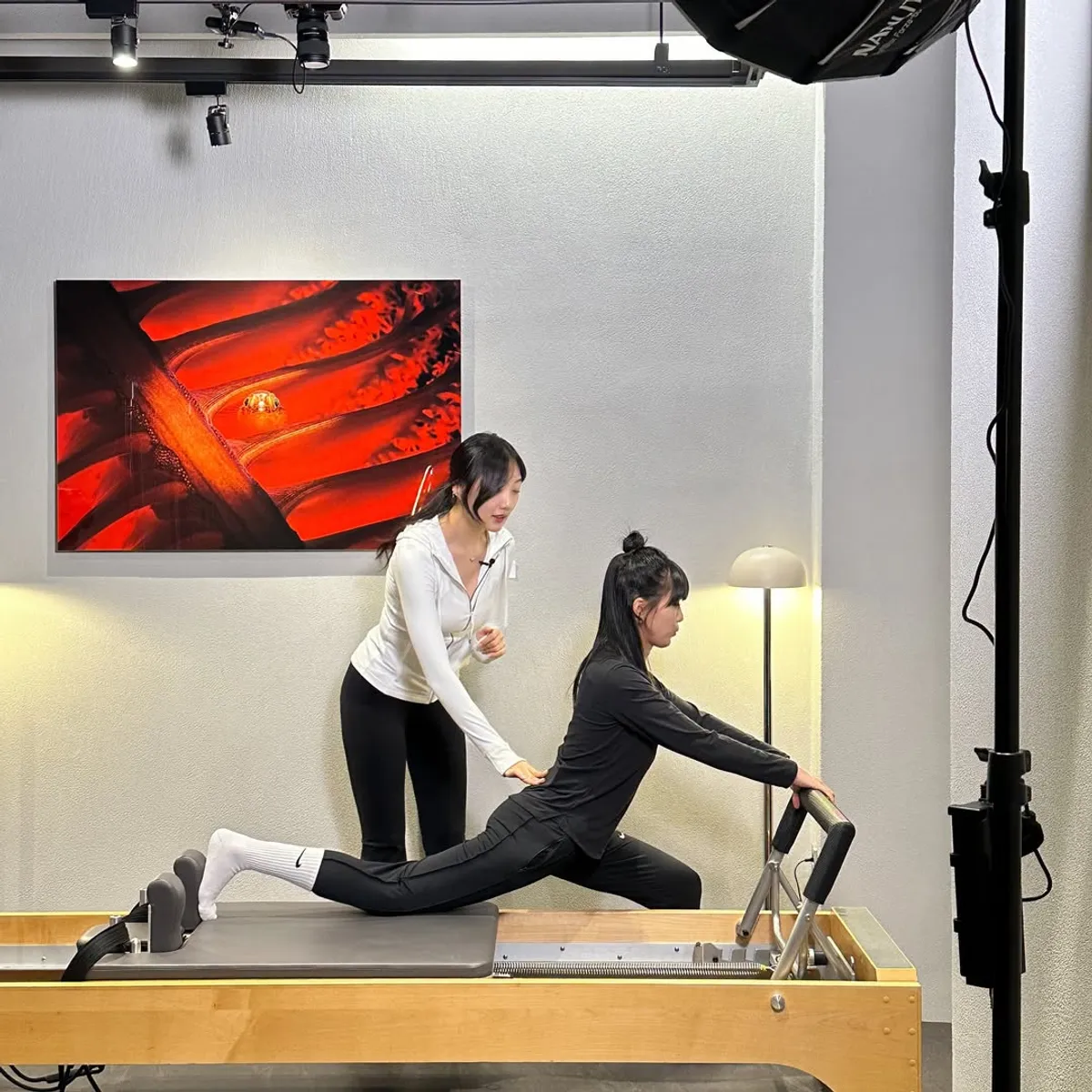
- Upper body and integration (10 min): Arm work with straps, seated or kneeling on the carriage
- Cool-down stretch (5 min): Using the reformer to gently open the hips and spine
The pace is slower than you expect. Reformer Pilates isn’t about speed — it’s about precision. Every repetition should feel deliberate.
Why Reformer Pilates Benefits Beginners Specifically
Many people assume reformer Pilates is advanced. The opposite is true. Here’s why it’s actually ideal for beginners:
- The machine corrects you: Springs and the carriage track keep your body in alignment, reducing the chance of practicing bad habits
- Resistance is scalable: A single spring can make an exercise gentle enough for post-injury rehab or challenging enough for an athlete
- It’s joint-friendly: The sliding carriage eliminates impact, making reformer Pilates safe for people with knee, hip, or back concerns
- Results come faster: Because the reformer targets muscles with precision, beginners often notice postural changes within 4-6 weeks
From a motor control perspective — something I studied during my Ph.D. coursework at Chung-Ang University — the reformer provides what neuroscientists call “external focus of attention.” Instead of thinking about abstract muscle engagement, your body responds to the concrete feedback of springs and carriage movement. This accelerates learning.
Common Beginner Mistakes to Avoid
After years of teaching reformer Pilates to beginners, these are the patterns I see most often:
- Gripping with the wrong muscles: Clenching your neck and shoulders instead of engaging your core. If your neck is sore after class, something went wrong.
- Moving too fast: The reformer rewards slow, controlled movement. If the carriage is slamming, you’ve lost control.
- Ignoring the breath: Lateral breathing isn’t optional — it’s what keeps your core engaged throughout the movement.
- Comparing yourself to others: Everyone’s spring setting and range of motion is different. Focus on your own body.
How to Choose the Right Reformer Pilates Studio
Not all reformer studios are equal. Here’s what to look for:
- Small group sizes: 4-8 people maximum. Anything larger and you won’t get individual attention.
- Initial assessment: A good studio evaluates your posture and movement before your first group class.
- Qualified instructors: Look for instructors with comprehensive certifications and ideally academic backgrounds in exercise science or related fields.
- Progressive programming: Your program should evolve as you improve, not repeat the same routine every week.
The K-Pilates approach emphasizes all four of these elements, which is one reason Korean Pilates has earned its global reputation.
Getting Started: What Beginners Need to Know
You don’t need special equipment or prior experience. Wear fitted, comfortable clothing (loose fabric can catch in the springs). Arrive 10 minutes early for your first session. And most importantly — give yourself at least five sessions before deciding if reformer Pilates is right for you. The first class is about learning the machine; the real benefits begin in session three or four.
Whether you’re coming from yoga, a dance background, or no movement experience at all, the reformer meets you exactly where you are. That’s what makes it such a powerful tool for beginners.
Curious about reformer Pilates? Explore Julia’s programs or follow her journey on Instagram.
Transform Your Movement, Transform Your Life
From Golf & Running Pilates to barre n yoga — discover programs designed by a sports science expert.