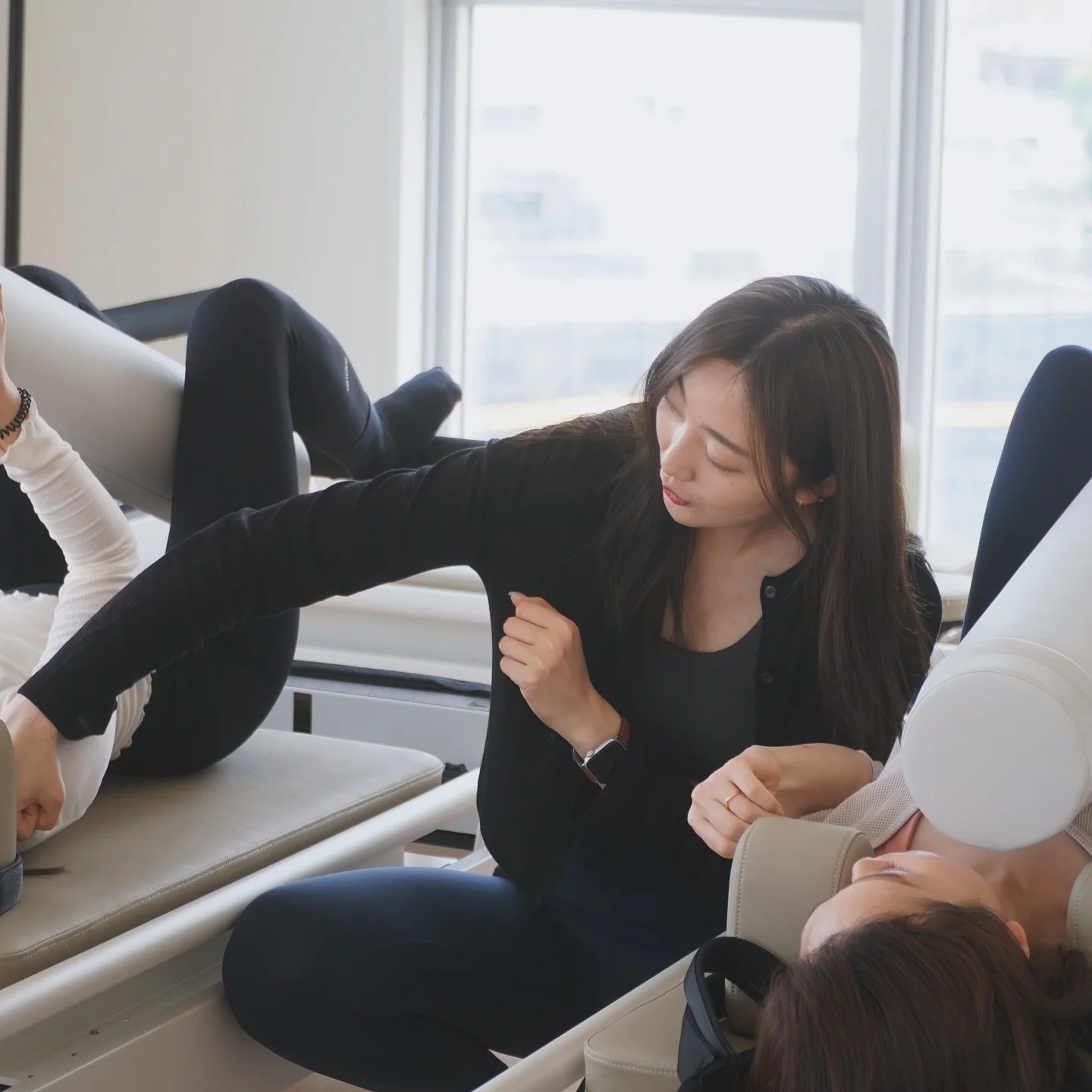
Mat vs Reformer Pilates: Which One Should You Choose?
If you have ever stood in front of a studio window watching people slide back and forth on a strange-looking machine, you have met the Reformer. If you have rolled out a mat at home and tried a YouTube class, you have met mat Pilates. The question I get asked more than almost any other is: which one should I actually do?
As someone who runs mm Pilates and mm barre n yoga in Seoul, I teach both styles every week. The honest answer is that they solve different problems. Choosing the right one — or the right combination — depends on your goals, your body, and your budget. This guide walks you through the decision framework I use with every new client.
What Is the Real Difference Between Mat and Reformer Pilates?
Mat Pilates uses only a floor mat and your body weight. Reformer Pilates uses a spring-loaded sliding carriage that adds adjustable resistance and support to every movement. That single equipment difference changes almost everything about how the two styles feel, teach, and build the body.
Joseph Pilates designed both. He called the mat work Contrology and created the apparatus — including the reformer — to help clients access positions and loads that a mat alone could not provide. In other words, the two were always meant to work together.
Mat vs Reformer: A Side-by-Side Comparison
| Mat Pilates | Reformer Pilates | |
|---|---|---|
| Equipment | Floor mat only | Spring-loaded carriage |
| Resistance | Bodyweight only | Adjustable springs (3–5 kg per spring) |
| Exercise variety | ~50 classical movements | 200+ variations |
| Beginner accessibility | Moderate — requires body awareness | High — machine guides alignment |
| Best for rehab | Good for stable recovery | Excellent for acute or post-surgical phases |
| Core endurance | Excellent | Good, but shorter holds |
| Flexibility gains | Good | Excellent — straps enable deeper range |
| Cost per session | Low ($0–30 USD group) | Higher ($30–80 USD small group) |
| Practice at home | Fully possible | Requires studio (or home reformer) |
| Learning curve | 2–3 months to feel deep core | 2–4 weeks to feel deep core |
Who Should Choose Mat Pilates First?
Mat Pilates is the right starting point if you already have strong body awareness or want to build a sustainable home practice. It is the most portable, affordable, and scalable form of Pilates. With a mat, a mirror, and 20 minutes, you can train anywhere in the world.
You will benefit most from a mat-first approach if:
- You have danced, practiced yoga, or done functional training for at least a year
- Your budget for studio classes is limited, or you travel frequently
- You want a daily habit, not just two structured sessions per week
- You are managing general deconditioning, not a specific injury
The challenge with mat Pilates is that without external feedback, it is easy to cheat. Beginners often substitute neck tension for abdominal engagement, or collapse into their lower backs during planks. A good instructor — or at least one thorough private session — helps you set up the basics correctly.
Who Should Choose Reformer Pilates First?
Reformer Pilates is the right starting point if you are new to movement, recovering from an injury, or want measurable results quickly. The reformer’s spring system provides both support and resistance, which means it can meet you wherever your body is today and progress with you as you get stronger.
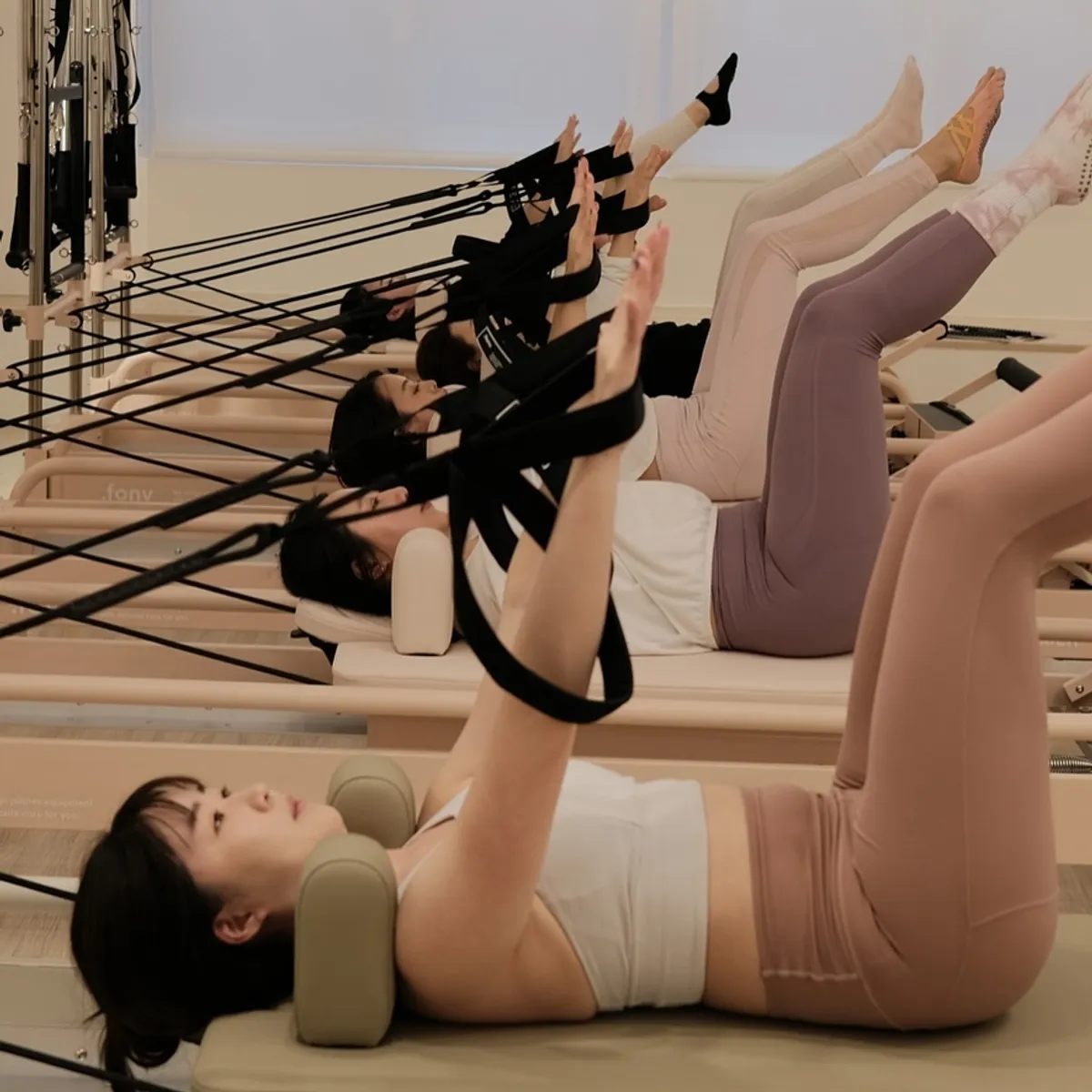
You will benefit most from a reformer-first approach if:
- You are a true beginner with no prior movement training
- You have back pain, joint issues, or are returning from a specific injury
- You sit at a desk most of the day and struggle to feel your deep core
- You want precise postural correction with an instructor watching every rep
In Korea, reformer Pilates is the default entry point for a reason. Every new client at mm Pilates begins with a postural assessment and a private reformer session, because the machine gives us a controlled environment to diagnose movement patterns and fix them. Most clients feel a difference in their posture within four to six weeks.
Can You Do Both? (The Honest Answer)
Yes — and I would argue most people should, eventually. Here is the progression I recommend to clients at my studio:
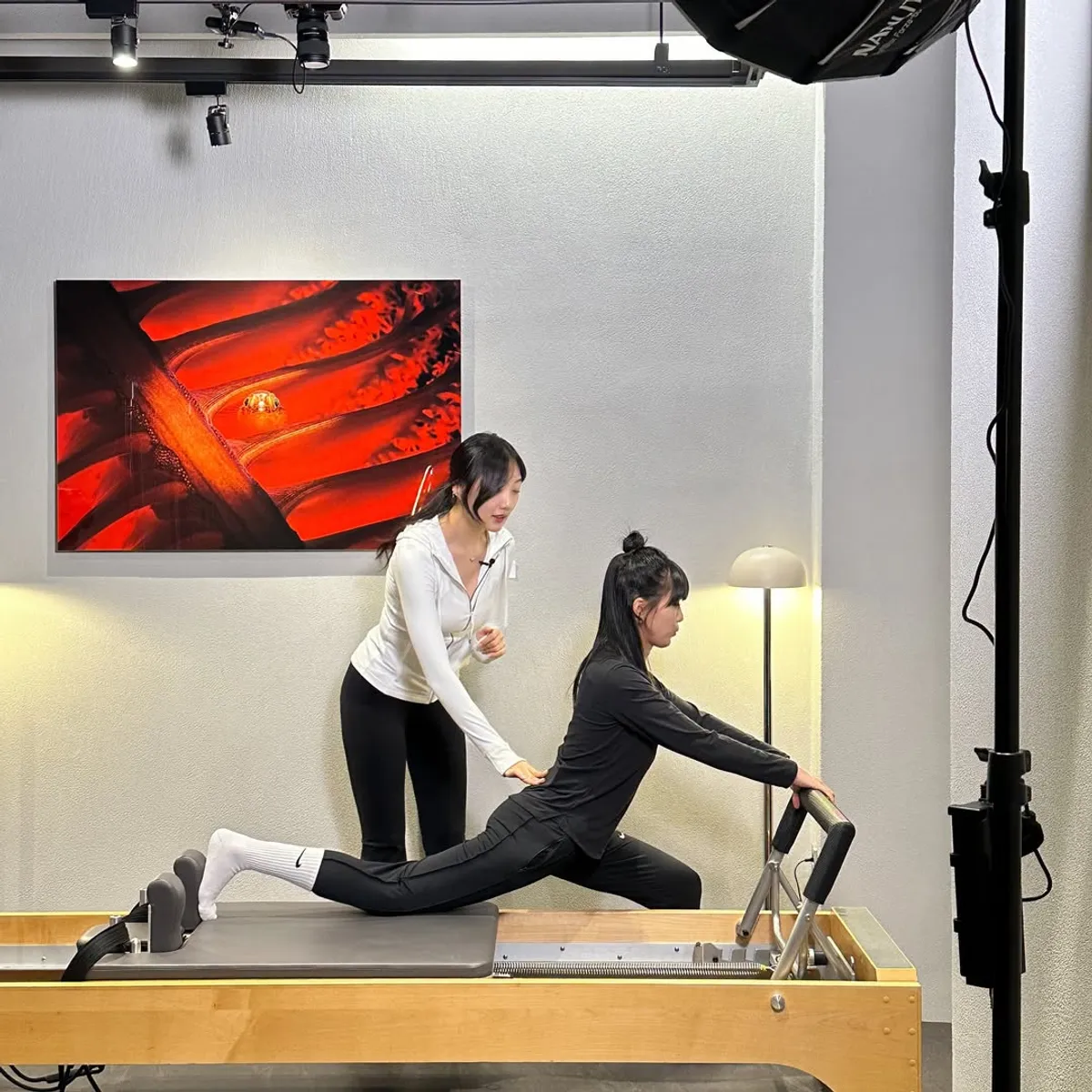
- Months 1–2: Reformer only, two sessions per week. Focus on learning breath, neutral spine, and spring feedback.
- Months 3–6: Add one mat session per week. The reformer has taught your body what deep core engagement feels like; the mat challenges you to recreate that feeling without assistance.
- Month 7 and beyond: Flexible programming. Some clients stay at 2 reformer + 1 mat; others shift to 1 reformer + 2 mat; a few advanced clients run mat-dominant with occasional reformer tune-ups.
The reformer is a teacher. The mat is where you practice what the reformer taught you. Thinking about it this way tends to dissolve the false “which is better” debate.
What About K-Pilates? Does the Same Logic Apply?
Korean Pilates studios tend to be reformer-dominant, often with almost no mat programming. This reflects our training culture — Korean instructors are typically certified through comprehensive apparatus programs that treat the reformer as the foundational tool, not a specialty add-on. When you take a class in Seoul, expect reformer-first, and ask specifically if you want mat work integrated.
Western studios, especially in North America, more often separate the two — mat studios and reformer studios are distinct categories, and many clients never cross over. Neither approach is wrong, but the Korean integrated model is one reason international clients often describe K-Pilates as more technically precise.
Common Mistakes When Choosing Between Mat and Reformer
After years of teaching both, here are the decision errors I see most often:
- Choosing based on price alone: A $25 mat class with 20 people is cheaper than a $60 reformer class with 6 people, but if you leave the mat class with bad habits, you are paying to practice the wrong patterns.
- Choosing based on social media: Reformer Pilates looks impressive on Instagram. Mat Pilates does not. This has nothing to do with which is better for your body.
- Assuming harder equals better: Reformer is not harder than mat. Advanced mat Pilates is extraordinarily demanding. They require different kinds of effort.
- Ignoring your instructor’s credentials: The quality of your instructor matters far more than the style. A mediocre reformer class is worse than a great mat class.
How to Decide This Week
If you are still unsure, here is the shortest possible framework:
- Injury, desk worker, or complete beginner? Start reformer.
- Active dancer, athlete, or experienced in movement? Start mat, then add reformer.
- Budget-constrained or travel often? Build a mat foundation; visit reformer studios when you can.
- Want fastest visible postural change? Reformer, 2–3x per week for 6 weeks.
Whatever you choose, give it at least eight weeks before evaluating. Pilates rewards consistency over intensity, and neither the mat nor the reformer will transform your body in a single month. What they will do, over time, is change how you move — and that changes everything else.
Trying to decide which approach fits your goals? Explore Julia’s programs or send a message on Instagram — I am happy to help you choose.
Transform Your Movement, Transform Your Life
From Golf & Running Pilates to barre n yoga — discover programs designed by a sports science expert.