Pilates for Back Pain: A Science-Based Approach to Lasting Relief
Back pain is the most common reason adults seek medical care, yet most treatments address the symptom rather than the movement dysfunction that caused it. Medication dulls the signal. Massage releases temporary tension. Surgery corrects a structural problem without retraining the patterns that created it.
After studying Motor Control in my doctoral program in Sports Science at Chung-Ang University, I approach back pain differently: the spine does not fail randomly. It fails where it is forced to compensate for dysfunction elsewhere in the body.
Why Does Your Back Hurt? Understanding the Real Causes
Most back pain is not a back problem. It is a movement problem that manifests in the back.
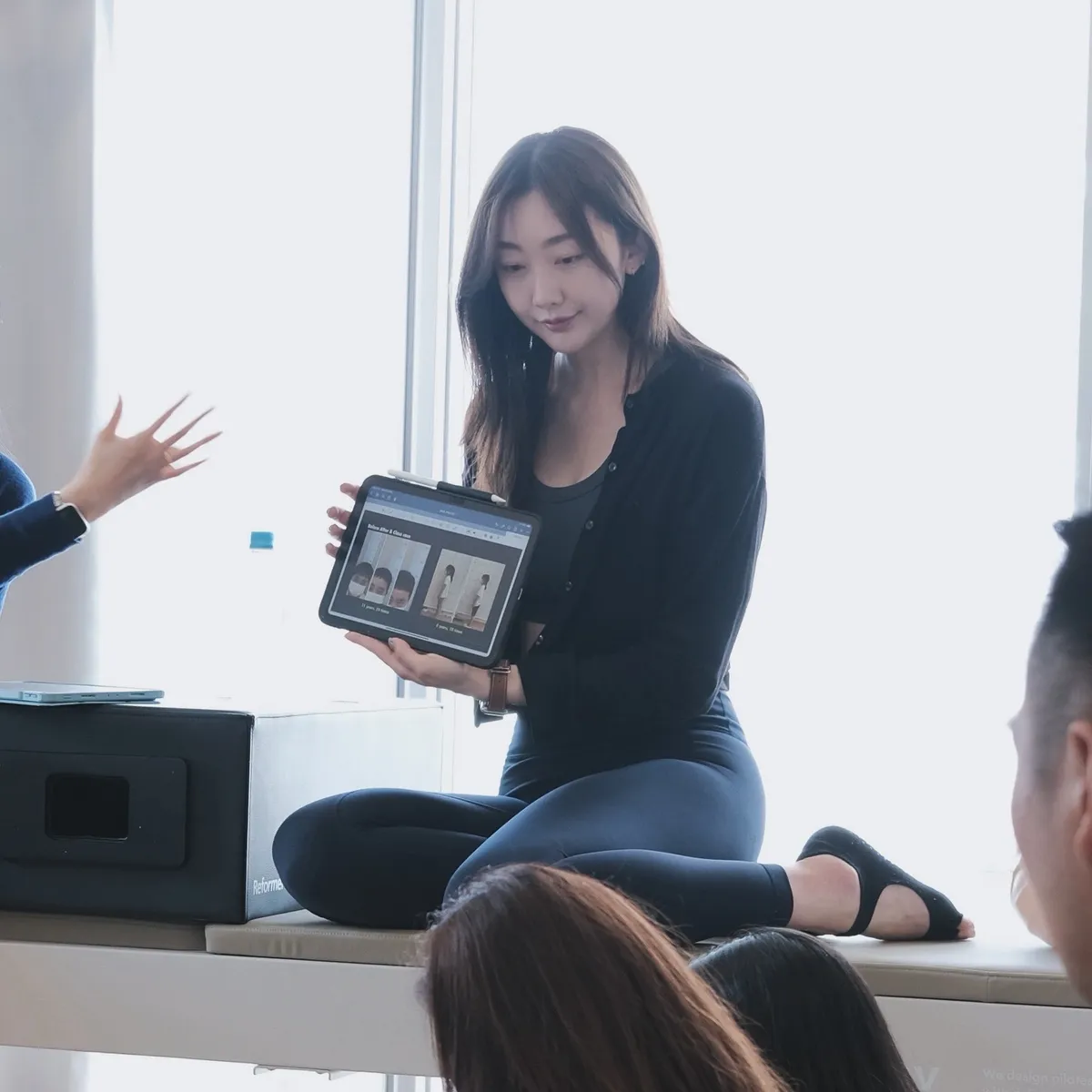
At a KPGA golf conference, I presented research on how insufficient thoracic rotation forces the lumbar spine to compensate. Golfers with limited thoracic mobility develop lower back pain not because their backs are weak, but because their backs are doing work the thoracic spine should handle. The same principle applies to anyone who sits at a desk, drives a car, or lives with limited spinal variety.
The deep core system — transversus abdominis, multifidus, pelvic floor, and diaphragm — is the spine’s primary stabilization mechanism. When any part is inhibited (which happens inevitably with prolonged sitting), superficial muscles and spinal structures absorb forces they were never designed to handle.
This is why back pain recurs. Targeting the pain site without retraining the deep core provides temporary relief at best.
How Pilates Addresses Different Types of Back Pain
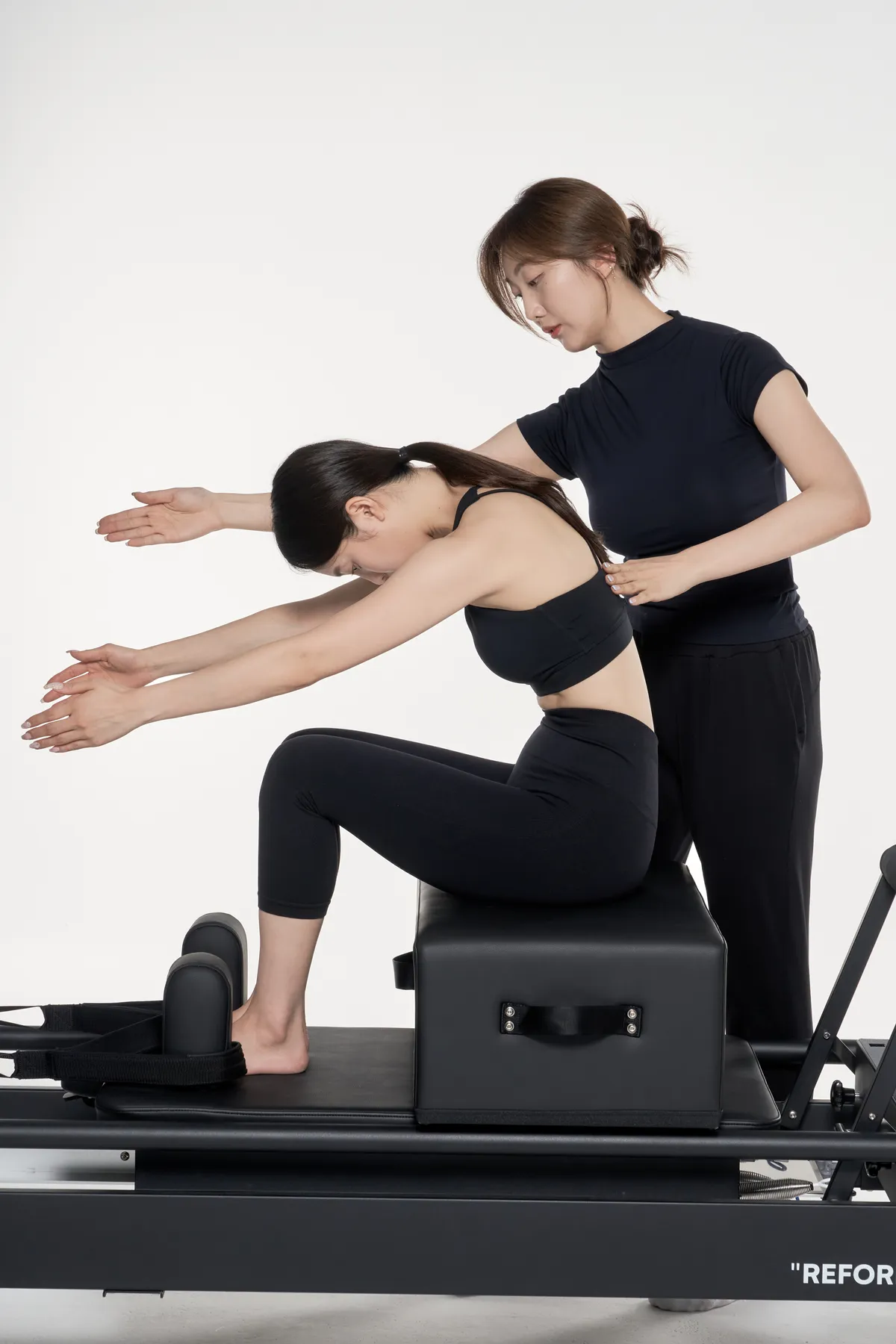
Not all back pain is the same, and a one-size-fits-all approach fails. In my studio, the first step is always a three-angle postural assessment — evaluating alignment from the front, side, and back — to identify exactly which compensatory patterns are driving the pain.
| Type of Back Pain | What Is Happening | How Pilates Addresses It |
|---|---|---|
| Disc herniation | Disc material presses on nerves due to sustained compression and poor spinal mechanics | Reformer traction for spinal decompression, deep core activation to reduce compressive load, neutral spine retraining |
| Muscle tension / spasm | Superficial muscles overwork to compensate for weak deep stabilizers | Deep core system activation (transversus, multifidus), reformer-based eccentric release, breath-movement coordination |
| Postural back pain | Prolonged sitting creates anterior pelvic tilt and thoracic kyphosis, loading the lumbar spine unevenly | Three-angle postural assessment, thoracic extension exercises, pelvic neutral training on reformer |
| Sciatica | Sciatic nerve compression from disc issues or piriformis tightness | Hip mobility restoration, piriformis release sequences, controlled lumbar traction on reformer springs |
| Post-surgery rehabilitation | Muscles atrophy and movement patterns distort after spinal surgery | Progressive reformer loading with calibrated spring resistance, proprioceptive retraining, gradual return to functional movement |
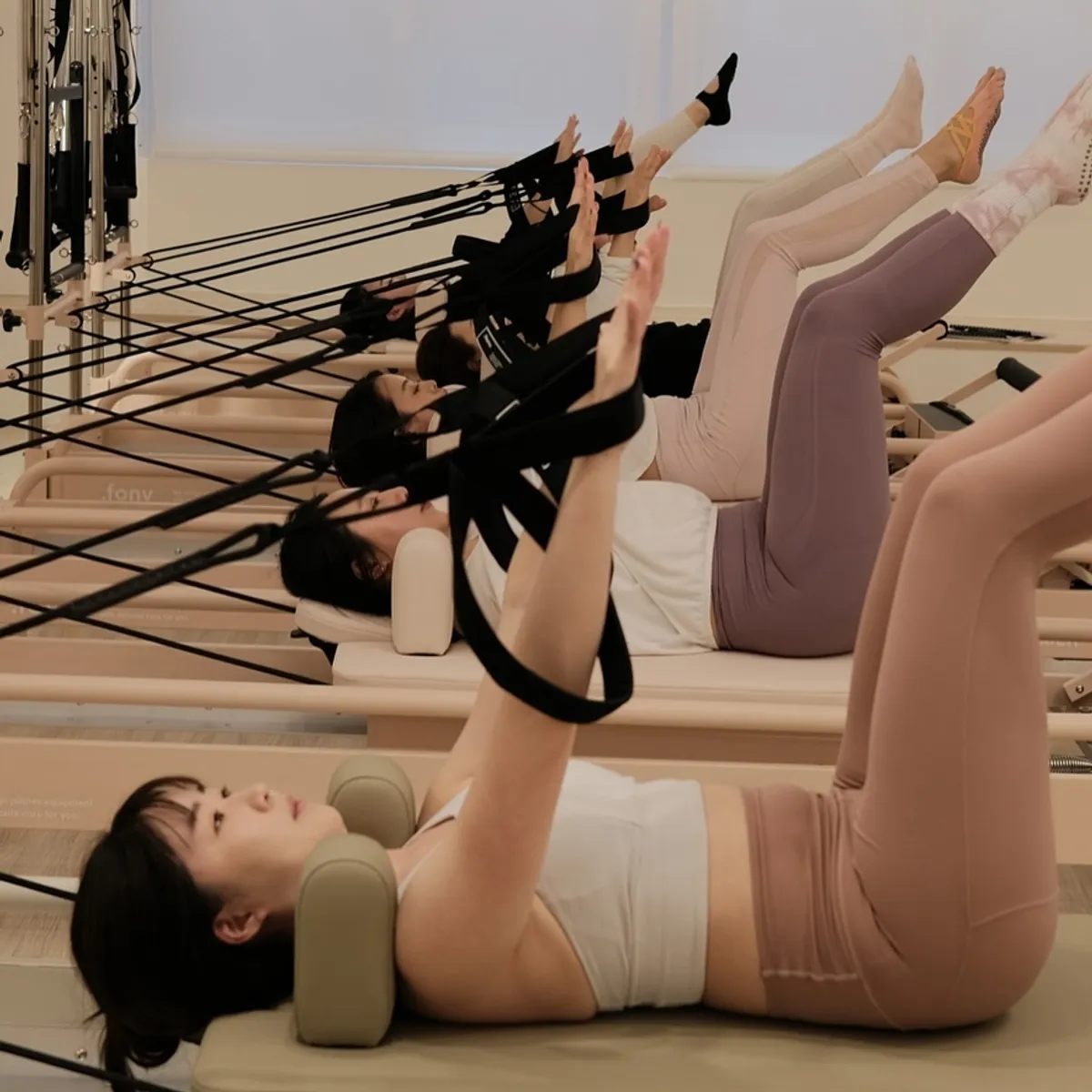
The reformer is particularly effective for back pain because its spring system provides calibrated resistance — the ability to load the spine precisely and progressively, unlike bodyweight exercises where load is fixed and often too heavy for a compromised spine.
The Deep Core System: Why It Matters More Than You Think
Core stability for back pain is not about six-pack abs or plank endurance. It is about four muscles forming a cylinder around the spine: transversus abdominis wrapping front and sides, multifidus running along the vertebrae, pelvic floor at the base, and diaphragm at the top.
When this system works correctly, it creates intra-abdominal pressure that stabilizes each vertebral segment before movement occurs. Motor control research shows that in healthy individuals, the transversus abdominis activates milliseconds before any limb movement — a feedforward mechanism preparing the spine for load. In chronic back pain, this anticipatory activation is delayed or absent, leaving the spine unprotected.
Pilates retrains exactly this mechanism. Every exercise begins with deep core activation and breath coordination, rebuilding the neurological timing that back pain disrupts.
What Does a Back Pain Pilates Program Look Like?
In my studio, I never begin with exercises. I begin with assessment.
The three-angle postural evaluation reveals which segments are hypermobile and which are hypomobile. Back pain almost always involves both — a stiff thoracic spine forcing excessive lumbar movement, or a locked sacroiliac joint shifting load to the vertebrae above.
From there, the program follows a clear progression. Sessions 1-2 focus on deep core activation and breath coordination. Sessions 3-4 introduce reformer-based spinal mobilization with spring resistance to decompress and restore segmental movement. Sessions 5-6 integrate core and spine work into functional patterns — bending, rotating, reaching. Sessions 7-8 build endurance so the new patterns become automatic.
This progression matters. Jumping to advanced exercises before the deep core is activated is why some report that Pilates “made their back worse.” The problem was not Pilates — it was skipping the foundation.
What Changes Can You Expect?
The first change is usually not in the back itself — it is in awareness. Clients begin to feel which muscles are working and which are compensating. This proprioceptive awakening is the foundation of lasting change.
By session 4, most clients report that their daily pain has decreased significantly. By session 8, the compensatory patterns that caused the pain are being replaced by efficient, supported movement. The back is no longer the weak link in the chain.
This approach reflects the same evidence-based philosophy behind K-Pilates — integrating academic sports science with practical movement training. The connection between thoracic mobility and lower back health is one I explored deeply in my Golf Pilates research, and the principle of correcting movement dysfunction rather than treating symptoms runs through every program I design, from Pilates vs. yoga comparisons to the broader Korean wellness philosophy that treats movement as preventive medicine. My own path from dance to Pilates taught me that the body always tells you where the problem is — if you know how to listen.
If back pain has become part of your daily life, it does not have to stay that way. The solution is not stronger muscles or more flexibility — it is retraining your body to move the way it was designed to.
Interested in a back pain assessment? Send a DM on Instagram @pilajuliaa. Private sessions and group classes are both available at mm Pilates in Sangam-dong, Seoul.
Transform Your Movement, Transform Your Life
From Golf & Running Pilates to barre n yoga — discover programs designed by a sports science expert.