Pilates for Runners: An 8-Session Program to Run Stronger and Injury-Free
If you run regularly, you probably know this feeling: the nagging knee pain at kilometer 8, the tight IT band that cuts training short, the lower back stiffness that lingers for days after a long run. Most runners assume these issues are simply the cost of the sport.
But after studying Motor Control in my doctoral program in Sports Science at Chung-Ang University and developing specialized movement programs, I reached a different conclusion: Running injuries are not caused by running — they are caused by how your body compensates while running.
Why Do Runners Get Injured? Understanding Running Mechanics Through Pilates
Running is a repetitive, single-plane movement that amplifies existing imbalances with every stride.
Every foot strike delivers 2.5 to 3 times your body weight in impact force. Over a 10-kilometer run, that means thousands of impact cycles. When your alignment is off — even slightly — those forces accumulate in the wrong places.
The five most common running injuries all trace back to biomechanical problems that Pilates directly addresses:
| Runner’s Injury | Root Cause | How Pilates Addresses It |
|---|---|---|
| Runner’s knee (patellofemoral pain) | Weak VMO, poor patellar tracking | Reformer footwork for quad balance, single-leg alignment drills |
| IT band syndrome | Weak glute medius, hip drop | Side-lying hip series, lateral chain activation on reformer |
| Plantar fasciitis | Tight posterior chain, foot collapse | Foot corrector work, calf eccentrics on reformer |
| Shin splints | Excessive anterior tibialis load, overpronation | Ankle alignment training, arch activation exercises |
| Lower back pain | Insufficient core stability, anterior pelvic tilt | Deep core activation (transversus, multifidus), pelvic neutral training |
What connects all five is a pattern of compensation. When one muscle group is weak or immobile, neighboring structures absorb the extra load. Pilates interrupts this cycle by retraining correct force distribution.
What Key Muscle Groups Does Running Pilates Target?
Running Pilates focuses on the deep stabilizers and lateral hip muscles that most running programs neglect.
Runners tend to overdevelop their quads, hip flexors, and calves while neglecting the muscles that keep them aligned: the glute medius, deep core stabilizers (transversus abdominis and multifidus), and posterior chain (hamstrings and glutes in coordination).
The Glute Medius Problem
The glute medius is arguably the most important muscle for injury prevention in runners, yet it is chronically underactive in most recreational runners. When it fails to stabilize the pelvis during single-leg stance — which is what every running stride is — the hip drops, the knee collapses inward, and the IT band takes the strain. This single dysfunction drives runner’s knee, IT band syndrome, and even shin splints.
In my program, we rebuild glute medius function using the reformer’s spring resistance for precise, controlled loading that running alone cannot replicate.
Core Stability for Running: Beyond Crunches
Most runners think core training means sit-ups or planks. But running demands anti-rotation and anti-extension stability — keeping your pelvis and spine neutral while your limbs move dynamically. This is exactly what Pilates was designed to train.
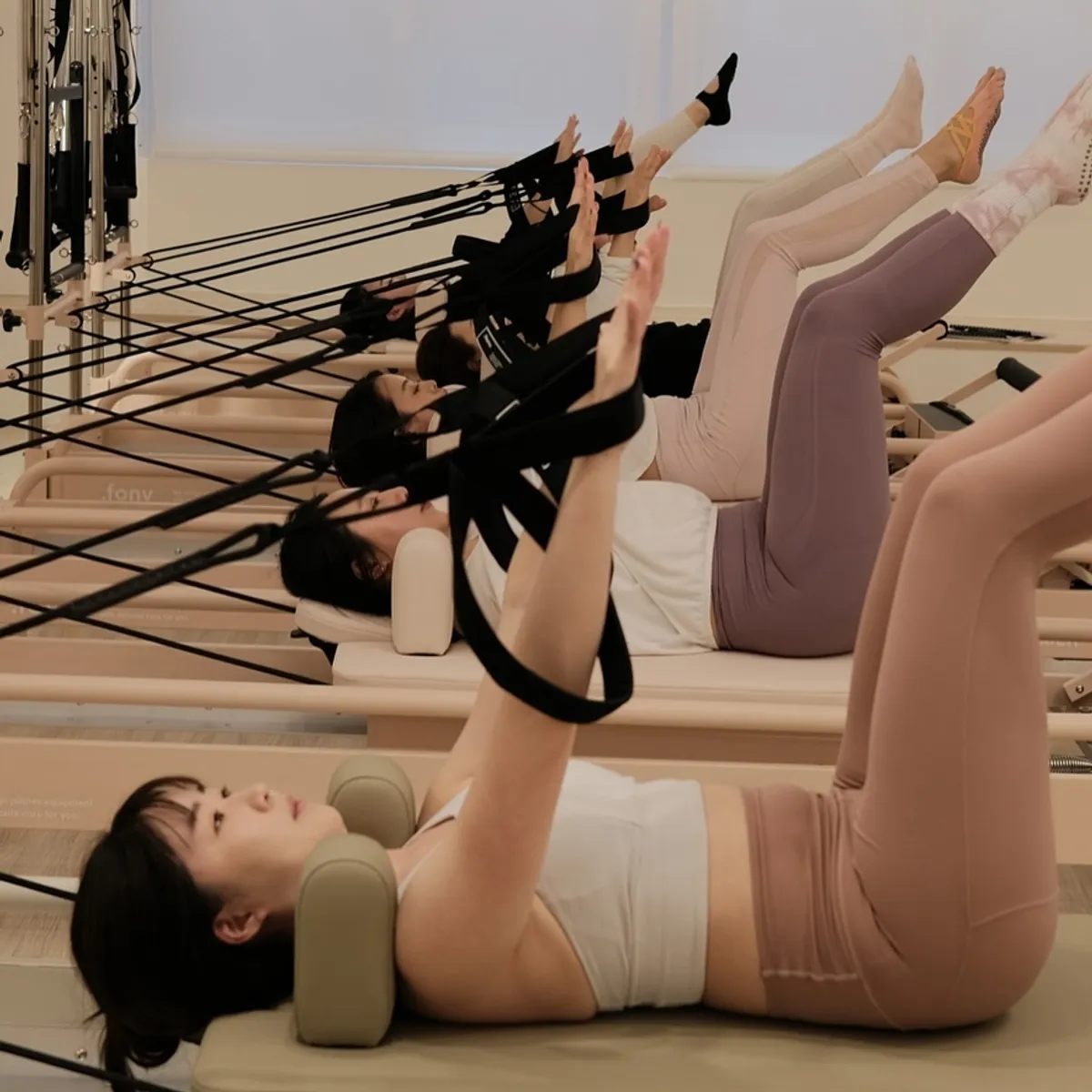
On the reformer, maintaining a stable trunk while the carriage moves beneath you simulates running demands in a controlled environment. This transfers directly to holding form during the final kilometers when fatigue sets in.
How Is the 8-Session Running Pilates Curriculum Structured?
The curriculum progresses from assessment and alignment correction through core integration to full running motion patterns.
I developed this curriculum based on my motor control research and years of working with recreational and competitive runners:
Sessions 1-2: Running Mechanics Assessment & Alignment Correction
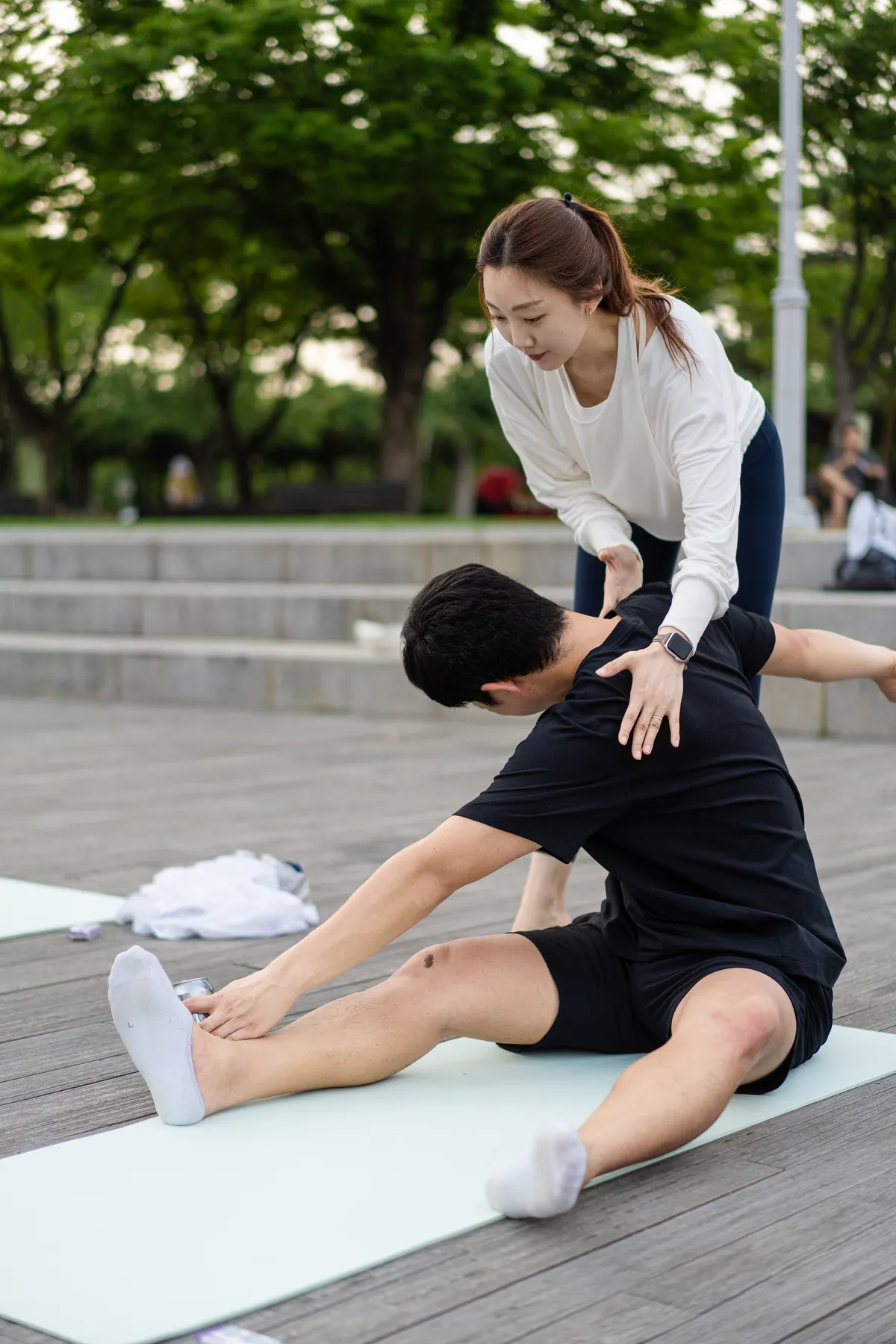
We begin with a movement assessment — evaluating foot alignment, pelvic position, thoracic mobility, and single-leg stability. I identify which compensatory patterns drive your injury risk and design your program accordingly.
Sessions 3-4: Key Muscle Group Activation & Core-Breath Integration
These sessions focus on waking up the muscles that running has been bypassing. We emphasize the connection between diaphragmatic breathing and deep core activation — a combination that most runners have never experienced but that transforms running posture immediately.
Sessions 5-6: Reformer Exercises for Eccentric Control & Stability
Using the reformer’s spring system, we build the eccentric strength that protects joints during the landing phase of running. Single-leg reformer work is particularly effective for developing the balance and control that prevent knee and ankle injuries.
Sessions 7-8: Motion Integration & Running-Specific Drills
The final sessions integrate everything into movement patterns that mirror running. We combine mat sequences with dynamic drills, creating a bridge between the Pilates studio and the road. Clients leave with a personalized warm-up and cool-down routine they can use before every run.
What Changes Do Runners Notice After Running Pilates?
The first change is not speed — it is the absence of pain and a newfound sense of control during longer distances.
Runners who complete the program consistently report three changes. First, the chronic pain diminishes or disappears. The knee that flared up at kilometer 8 stays quiet. Second, running feels easier. Better core stability means less energy wasted on compensation, translating to improved running economy. Third, recovery accelerates. Post-run stiffness that lasted two days resolves in hours.
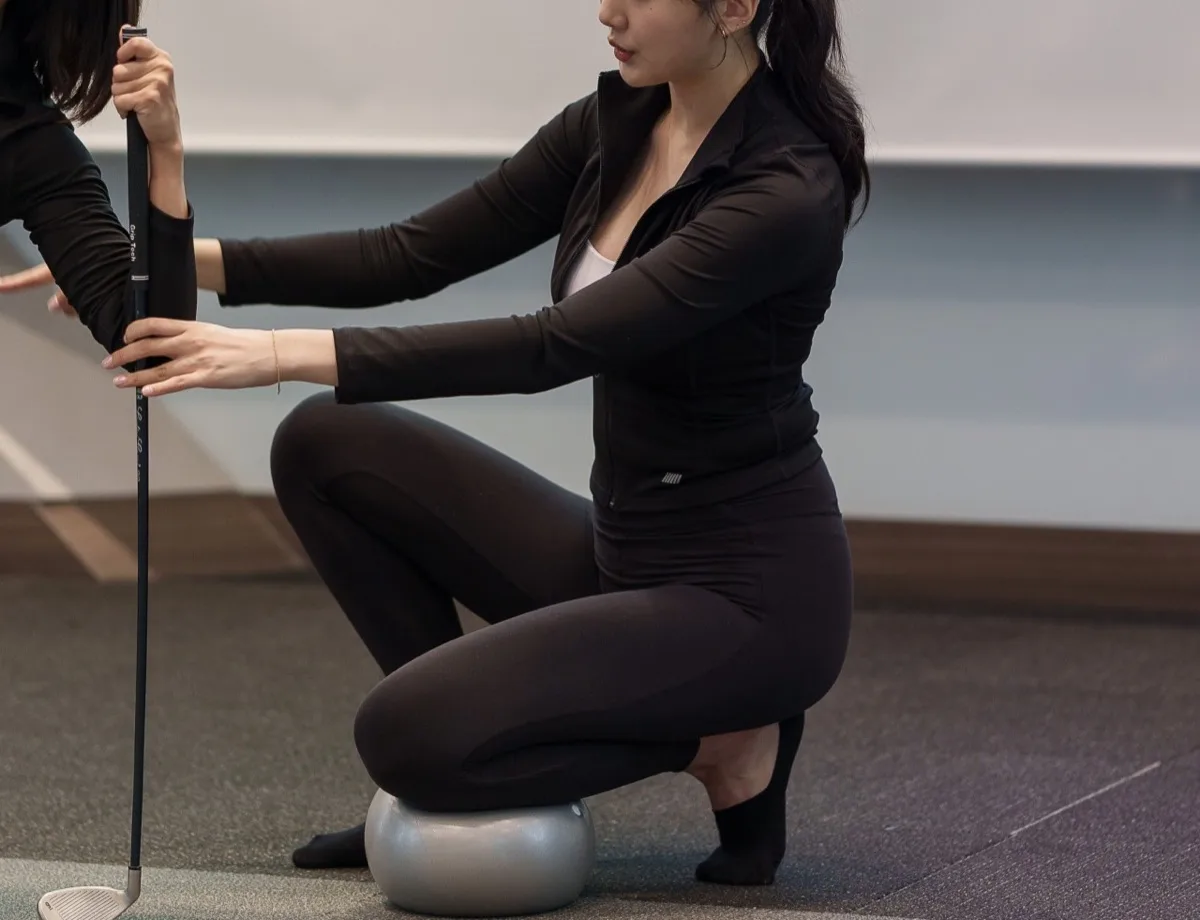
This is the same evidence-based approach that defines K-Pilates globally — integrating academic sports science with practical movement training. Just as I developed a specialized Golf Pilates track for golfers and a Kids Pilates program for young athletes, Running Pilates addresses the specific demands of the running body. The philosophy connects to Korea’s broader wellness culture, where movement is treated as preventive medicine rather than mere exercise. And like my journey from dance to Pilates, the Running Pilates program is built on the conviction that understanding how the body moves is the foundation of all performance.
Whether you are training for your first 5K or preparing for a marathon, I encourage you to experience how Pilates can change not just your running — but your relationship with your body.
Ready to try Running Pilates? Send a DM on Instagram @pilajuliaa. Private sessions and group classes are both available at mm Pilates in Sangam-dong, Seoul.
Transform Your Movement, Transform Your Life
From Golf & Running Pilates to barre n yoga — discover programs designed by a sports science expert.