Pilates for Office Workers: How to Reverse Desk Posture Damage
You sit for eight hours, stand up, and feel like your body has aged a decade. The stiff neck, the shoulders that round forward, the lower back that aches before lunch. If you work at a desk, this is probably your daily reality.
But here is what most people miss: the pain is not caused by sitting — it is caused by what sitting does to your movement patterns. After years of studying Motor Control in my doctoral program in Sports Science at Chung-Ang University, I have seen this pattern repeat hundreds of times. The desk does not injure you. The compensations your body builds around the desk do.
What Does Desk Work Actually Do to Your Body?
Sitting for prolonged periods systematically shuts down the muscles that keep you upright and overloads the ones that pull you forward.
When you sit at a desk, your body adapts to that position. Hip flexors shorten. Glutes deactivate. Your head drifts forward toward the screen, and the deep neck flexors weaken while the upper trapezius works overtime. Over months and years, these adaptations become your default posture — even when you stand up.
Here are the five most common postural dysfunctions I see in office workers:
| Postural Problem | Symptoms | Pilates Solution |
|---|---|---|
| Forward head posture | Neck pain, tension headaches, jaw tightness | Deep neck flexor activation, cervical alignment on reformer, thoracic extension exercises |
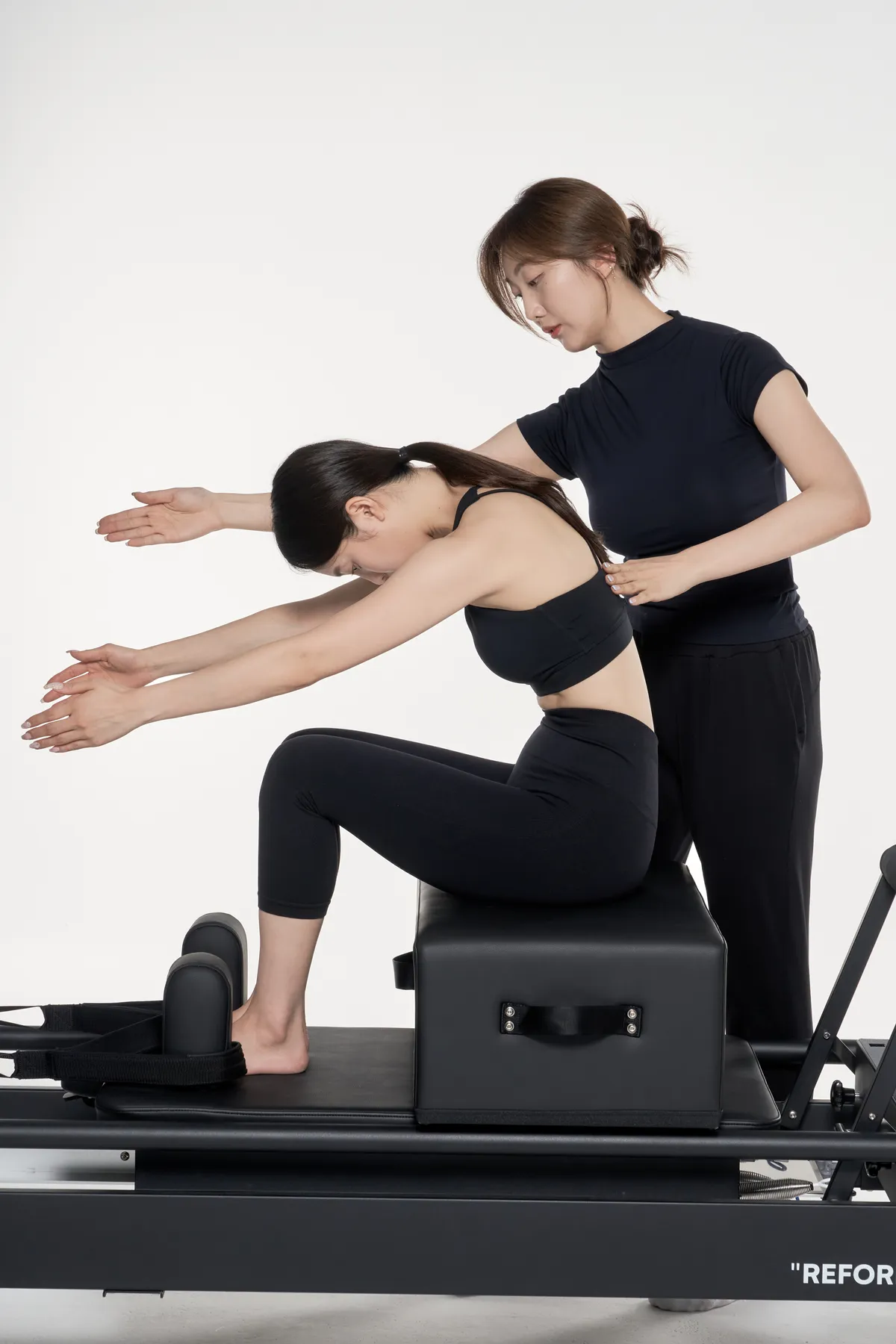
| Rounded shoulders (upper cross syndrome) | Shoulder pain, restricted breathing, upper back fatigue | Chest opening on long box, scapular stabilization, posterior chain strengthening |
| Tight hip flexors | Lower back pain, anterior pelvic tilt, difficulty standing tall | Hip flexor release on reformer, psoas lengthening, glute activation sequences |
| Weak core / deactivated deep stabilizers | General lower back ache, poor posture endurance, fatigue by afternoon | Transversus abdominis retraining, reformer-based core stability progressions |
| Wrist and neck tension | Tingling in fingers, chronic neck stiffness, shoulder elevation | Wrist mobilization, shoulder girdle decompression, breath-based tension release |
These five problems rarely appear in isolation. Most desk workers present with three or four simultaneously, creating a chain of compensation that no single stretch or exercise can resolve.
Why Is Reformer Pilates More Effective Than Stretching for Desk Posture?
Stretching addresses tightness. Pilates retrains the movement patterns that caused the tightness in the first place.
Stretching your hip flexors feels good temporarily, but if you return to the same sitting posture without reactivating your glutes and core, the tightness returns within hours. Pilates works on the neuromuscular level — teaching your body new patterns of activation, not just temporarily lengthening tissue.
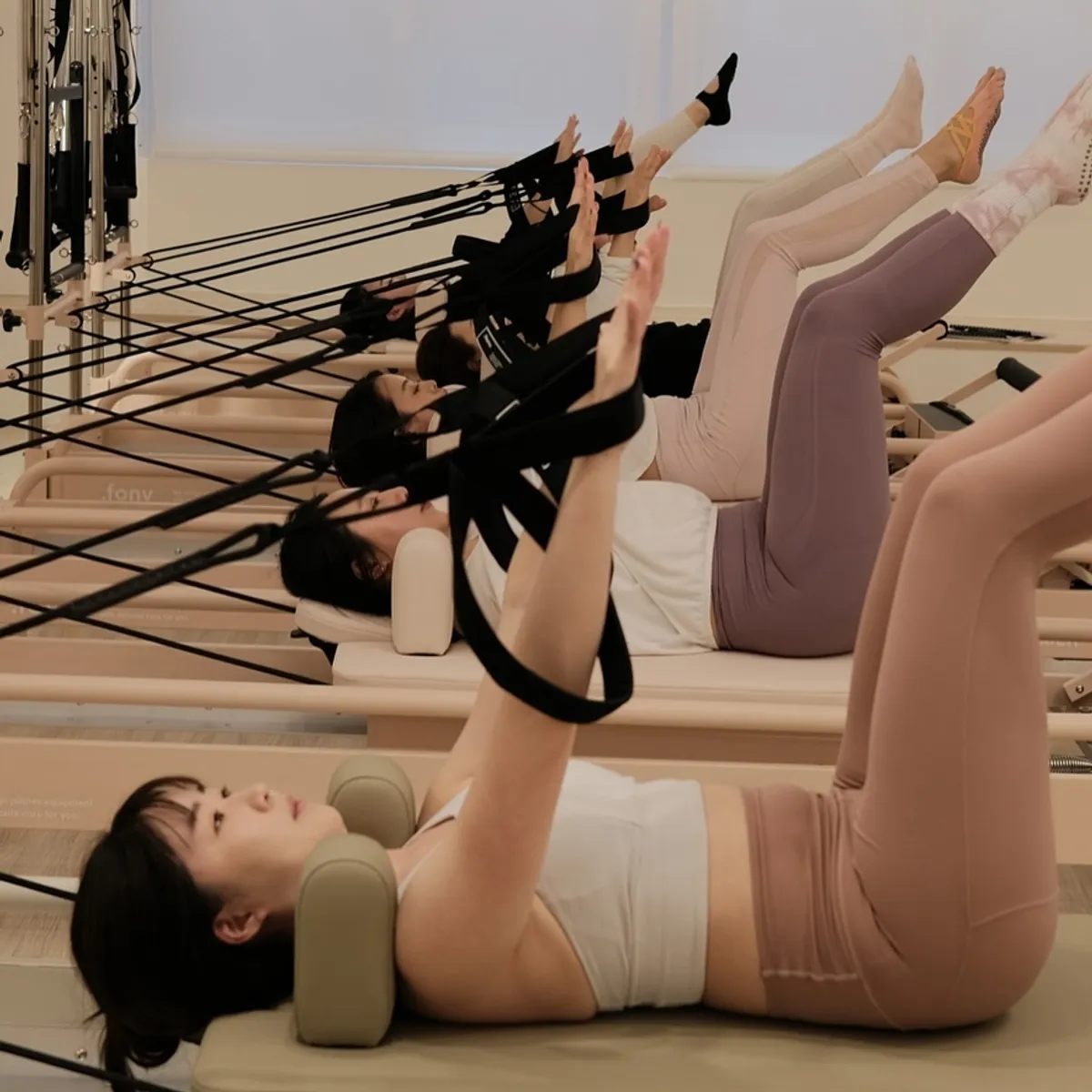
The reformer is particularly effective for desk workers because its spring system provides calibrated resistance that guides alignment. When your body has spent years in a forward-rounded position, your proprioception — your sense of where “straight” is — becomes unreliable. You think you are sitting up straight, but you are still ten degrees forward. The reformer’s springs give your nervous system accurate feedback, recalibrating what neutral actually feels like.
How Does K-Pilates Assessment Work for Office Workers?
Before designing any program, I evaluate posture from three angles — anterior, lateral, and posterior — to identify the specific pattern of dysfunction.
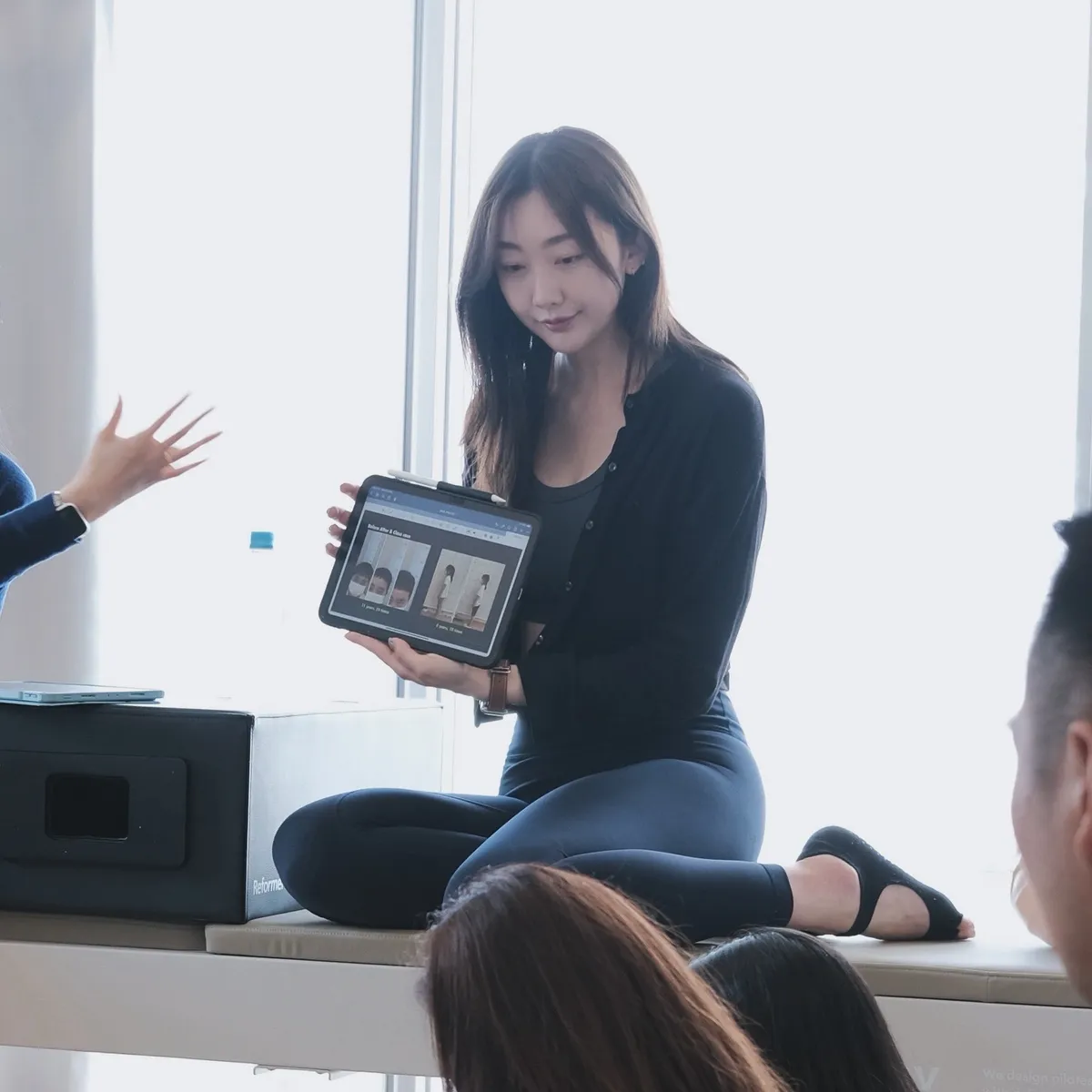
This is the foundation of my K-Pilates assessment protocol. Rather than applying a generic stretch routine, I analyze how each individual’s desk habits have shaped their compensatory patterns. Two people with the same job title can have completely different postural issues depending on their screen setup, dominant hand, and movement history.
The three-angle assessment reveals:
- Anterior view: Shoulder height asymmetry, head tilt, rib cage rotation
- Lateral view: Forward head position, thoracic kyphosis, pelvic tilt
- Posterior view: Scapular winging, spinal deviation, hip alignment
From this assessment, I build a targeted reformer program that addresses the root causes in order of priority. The most urgent issues — typically forward head posture and hip flexor shortening — are addressed first because they create the most downstream compensation.
What Does a Desk Worker’s Pilates Session Look Like?
A typical session moves from release and mobilization through activation to integration, reversing the desk posture pattern layer by layer.
We begin with breath work and spinal mobilization — reconnecting you with your diaphragm, which often becomes restricted from hunched sitting. Then we move to targeted activation: waking up the glutes that sitting has turned off, engaging the deep core stabilizers that have gone dormant, and strengthening the posterior chain that rounds forward all day.
The second half focuses on integration — combining these activations into functional movement patterns. Reformer footwork retrains lower body alignment. Long box work opens the chest and trains scapular control. Standing balance sequences challenge your newly corrected posture in real-world positions.
What makes this approach effective is its specificity. Just as I design sport-specific programs for different athletic populations, the desk worker program targets the exact patterns that prolonged sitting creates. The philosophy is the same one that drives Korea’s wellness culture — treating movement as preventive medicine, not reactive treatment.
What Changes Do Office Workers Notice?
The first change is not how you look — it is how you feel at 4 PM.
Office workers who commit to twice-weekly sessions consistently report the same progression. Within the first two weeks, the end-of-day neck and shoulder tension diminishes. By week four, they notice they are sitting differently without thinking about it — the corrections become automatic. By week eight, colleagues start commenting on their posture.
But the change that surprises people most is energy. When your body stops fighting gravity all day — when your skeleton stacks properly and your muscles work in their intended roles — you simply have more energy at the end of the workday. The afternoon fatigue that felt inevitable turns out to have been a posture problem all along.
This is why I believe Pilates is not a luxury for office workers — it is a necessity. The same evidence-based, assessment-driven approach that defines my teaching philosophy and my work with children and dancers applies here. Your desk does not have to define your body. With the right intervention, eight hours of sitting can coexist with a body that moves freely and stands tall.
Want to undo years of desk posture damage? Send a DM on Instagram @pilajuliaa. Private sessions and group classes are both available at mm Pilates in Sangam-dong, Seoul.
Transform Your Movement, Transform Your Life
From Golf & Running Pilates to barre n yoga — discover programs designed by a sports science expert.